Home Blog

How Much To Tip Tattoo Artists: A Helpful Guide

0

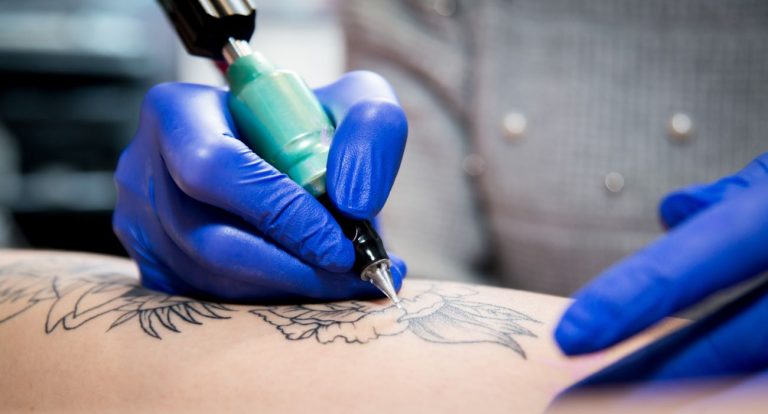
Tattooing is a recognized and developing art form. While a tiny number of tattoo artists have achieved a certain level of popularity, the majority run their modest businesses or work as independent contractors to support their families. Like chefs, authors, and graphic designers, they are creative professionals. In light of this, how important is it to tip tattoo artists?

No set amount of tip is required to give to tattoo artists. For tipping service-based industry workers, a decent guideline is 15–25%. Nevertheless, you may tip more or less based on various factors, such as the quality of work and your tattoo’s complexity. Tipping as little as 10% is also acceptable if your tattoo is large and expensive. 

Although leaving a gratuity for your artist is not mandatory, most tattoo artists appreciate and anticipate it. But what percentage should you leave your tattoo artist? Read on to learn more. 

Is Tipping Expected Or Optional?
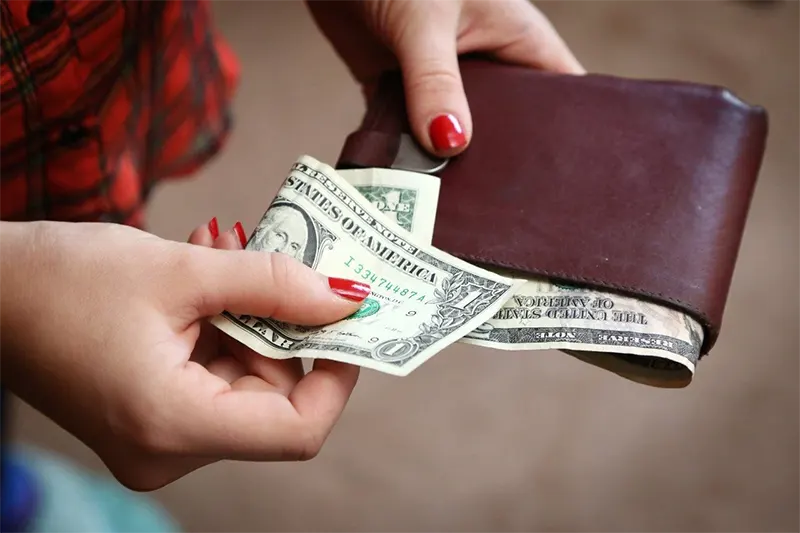
qantas

Most of the time, tipping is undoubtedly optional but customary, so many people still choose to do it. 

Why do people do it if it’s optional? After obtaining personalized treatment, a client may tip for various reasons. It might vary from feeling like they have to do it to just wanting to express gratitude to their artists for providing them with fantastic service.

Leaving a tip after getting personalized treatment is always a good idea, mainly because many servers depend on gratuities from clients to supplement their meager wages. Therefore, tip your tattoo artist, mainly if you had a great experience.

However, there are certain situations when leaving a tip is inappropriate, such as in Japan, where doing so might sometimes be slightly against a server’s work ethic. Though many people are aware of cultural differences, this is only sometimes the case.  

Why Should You Tip

It is crucial to recognize tattooing for what it is: a highly individualized service. When you hire a tattoo artist, you request that they permanently inscribe their artistic vision on your body. Because of this, you should tip them and pay them for their services. 

You may better comprehend the financial challenges your tattoo artist deals with daily by seeing them as solo artists or small company owners.

A tattoo parlor is costly to operate. Your tattoo must, in some manner, cover the costs of materials, services, supplies, scheduling software, rent, utilities, and promotion. 

It is also important to consider taxes. If your tattoo artist is an independent artist, this also implies that taxes are not deducted automatically from their paychecks, but must be paid directly to the IRS. 

Giving your artist a tip is a practical way to express your gratitude for their originality, artistry, and individualized service.

Additionally, since tattooing is often only considered freelance employment, tattoo artists, like other artists, depend primarily on commissions. They may find this challenging since they must spend money on their own supplies like inks and needles.

They must refrain from cutting corners on this since doing so would harm their tattoo shop’s reputation. 

Even yet, the decision to tip tattoo artists is entirely yours. Tipping your artist will go a long way, particularly if you like their work.

When Should You Tip

freshbodycoupons

Like with a hair or nail appointment, provide a tip after the service, or make a payment at the counter or right after. 

Some tattoo shop that does not accept credit card tips, so be ready for your appointment and bring cash. Contact the studio before your appointment to find out whether it is permissible to leave a tip on a credit card.  

On the other hand, you could be debating whether to tip a tattoo artist after each session if it takes multiple sessions to create a giant tattoo, like a backpiece or sleeve. Tipping is generally accepted after each tattoo session, since extensive tattoos may take months or even years to finish.

Although other artists say they are a little more tolerant of big projects and don’t anticipate tips at the end of every session. It depends, but if you wait until the very end, you may be able to donate significantly.

By dispersing the tip over time, you may express gratitude for the tattoo artist’s work while making it easier on your budget.  

When Should You Not Tip?

If you have a negative encounter, you may have the right to skip tipping. Tipping is a statement of thanks and appreciation, so do not feel obligated to do so if you don’t feel that way throughout your session. A tattoo session may be challenging if the tattoo artist is unkind or has a bad attitude.

Understanding that having a horrible session differs from disliking your tattoo. If you tell your tattoo artist immediately that you don’t like it, they could offer to repair the tattoo free of charge.

Even if you don’t like the outcome, think about tipping if they made you comfortable, guided you through the aftercare process, used a clean setting, or made a custom design. 

Only tip if your tattoo artist accepts gratuities. There is a tattoo community that has different views and will not accept tips. They could reject your gratuity outright or give you back half of it. 

How Much Should You Tip

In reality, there is no hard and fast rule for tipping tattoo artists.

For tipping service workers, a decent guideline is 15–25%. For example, with a 20% tip, your final tattoo price would cost $240 if the original tattoo price is $200. 

femaletattooers

Nevertheless, you may tip more or less based on various variables. Your inclination to tip will, among other things, depend on your level of satisfaction with their performance. It seems reasonable that you would want to leave a smaller tip if you did not like the job. You have the choice. 

Also, if you operate your own company and can provide your artist a nice gift in place of payment, inquire whether they would be interested in getting tipped for products or services.

However, cash tips are always ideal. In this manner, your tattoo artist receives the total gratuity and is exempt from paying any taxes or service charges. Add a little more to offset the costs if you add your tip to a credit or debit transaction.

Additionally, most credit card interfaces include prompts for adding tips throughout the checkout process to make things even simpler.

Don’t be shy or embarrassed about tipping; tipping etiquette is just a part of getting a tattoo. Just spend some money to celebrate your new tattoo! 

How To Tip on A Budget

You can still have that one tattoo if your budget is tight, and you can still tip the artist well.

Ask your artist whether they are okay with you tipping them on a session-by-session basis. By doing this, you may pay the tips you intended to give them at the end of each session, adding up to the whole amount. This way may save you if getting a tattoo takes longer than expected. 

Or you may consider giving your artist a present. Since this is unusual, check with your artist before the appointment to determine whether a gift is a good tip. However, it is advisable to contemplate not getting a tattoo if you cannot afford the tip since many artists only take cash tips. 

What If You’re Not Happy With Your Tattoo?

It is never enjoyable to have a horrible tattoo experience, but we recommend talking to your artist about it so they can try to make it better; nobody wants to leave the studio feeling unhappy. 

However, your tattoo artist deserves a tip if they take the time to design a unique tattoo just for you and work diligently over several sessions to execute the design successfully. 

Tattoo Tipping Overseas

If you reside in a nation where tipping is frowned upon, refrain from leaving tips.

Although the U.S. has a strong tipping culture, it may be considered rude or unnecessary in some other countries. If you are getting a tattoo outside of the United States, be careful to research the custom of tipping and abide by it.

Tipping is an insult in some countries in Asia, like Japan. Some company owners will presume that you believe they underpay their staff. 

While it differs among European nations, gratuities are nevertheless commonly accepted.  

Tipping Pointers to Remember

savedtattoo

Here are some tattoo etiquette and additional pointers to remember when tipping your tattoo artist.

  • Credit card tipping entails card fees in addition to taxes that your tattoo artist must pay. Therefore, cash payments guarantee they get the entire tip.
  • In addition to a tip, you may also provide a social media shoutout and a five-star review. 
  • Research the tattoo artist’s social media before seeing them for the first time. 
  • A present from your own business is a fantastic complement to a monetary tip. 
  • It is best to put off getting that tattoo if you don’t have enough money to give them monetary tips. 

Conclusion

Nowadays, most people see tattoos as a form of self-expression. Tattoo artists produce everlasting body art while putting a lot of effort into realizing your vision. Since there is no golden rule for tipping, the answer to the question is totally up to you.

Even while you are not required to tip, doing so will make your tattoo artist feel appreciated. It will also guarantee that you will get even more excellent care on your future projects. 
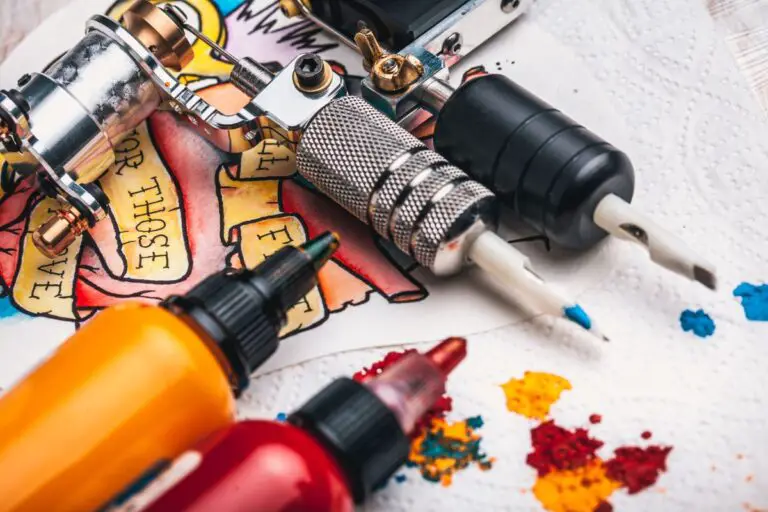
What Are the Safest Tattoo Inks? Best Qualities to Look For

0

In the tattoo industry, finding the safest tattoo inks is an essential step in the tattooing process. As you probably already know, inks that are unsafe can cause health problems.

Tattoo inks that are hypoallergenic and do not contain heavy metals, formaldehyde, and other toxic elements are considered safe. It is important to make it a habit to check where tattoo inks are manufactured and look at the ingredients before you buy one.

In this article, you will learn everything you need to know about choosing the safest tattoo inks. We deep dive into the importance of knowing where tattoo inks are manufactured, harmful ingredients you should know about, and tips on how to find the safest tattoo inks.

Importance of Knowing Where a Tattoo Ink is Manufactured

nextluxury

Tattoos have become a popular form of self-expression, with people choosing to permanently ink their skin with symbols, phrases, and designs that hold personal significance.

While the process of tattooing has been around for centuries, the ink used today is a relatively modern invention.

In recent years, there has been a growing awareness about the importance of knowing where a tattoo ink is manufactured, and for good reasons.

Potential Health Risks

One of the main reasons why it’s important to know your tattoo ink manufacturer is because of the potential health risks associated with certain inks.

Some tattoo inks have been found to contain harmful chemicals and contaminants, such as heavy metals, that can be harmful to the body.

These contaminants can leach into the skin and potentially cause health problems, including allergies, infections, and even cancer.

Buy Only High-Quality Inks

In addition to the potential health risks, knowing where tattoo ink is manufactured can also help you ensure that you are using a high-quality product.

Not all tattoo inks are created equal, and some are of a lower quality than others. By getting tattoo ink from a reputable and trustworthy manufacturer, you can be confident that you are using an ink that will hold up well over time and won’t fade or discolor quickly.

Environmental Impact

Another reason why it’s important to know tattoo ink manufacturers is because of the environmental impact of the manufacturing process.

Some ink manufacturers may not have environmentally friendly practices, which can contribute to pollution and other negative impacts on the planet.

By choosing a manufacturer that takes environmental concerns into consideration, you can be sure that you are not contributing to these negative effects.
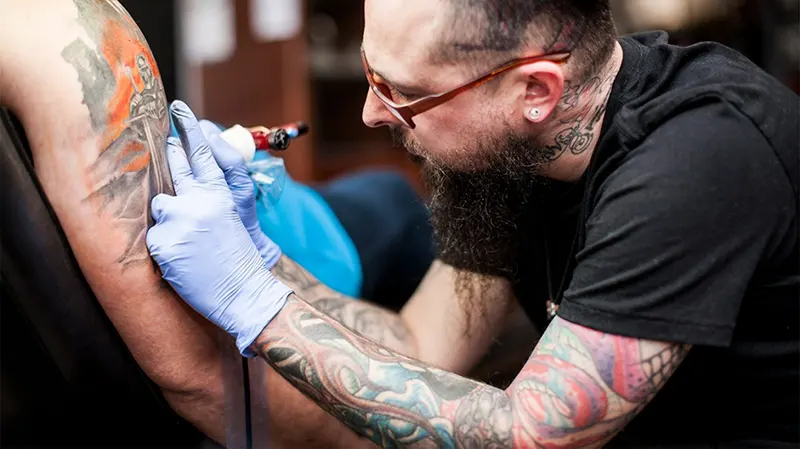
So, when choosing a tattoo ink, be sure to do your research and select a manufacturer that meets your standards for safety, quality, and environmental responsibility.

Harmful Tattoo Ink Ingredients

When it comes to tattoos, the ink used is just as important as the design and placement. Unfortunately, not all tattoo inks are safe, and some contain harmful ingredients that can have serious health consequences.

It’s vital to be aware of these potentially dangerous ingredients and to choose a tattoo ink that is safe and of high quality.

Heavy Metals

steadfastnutrition

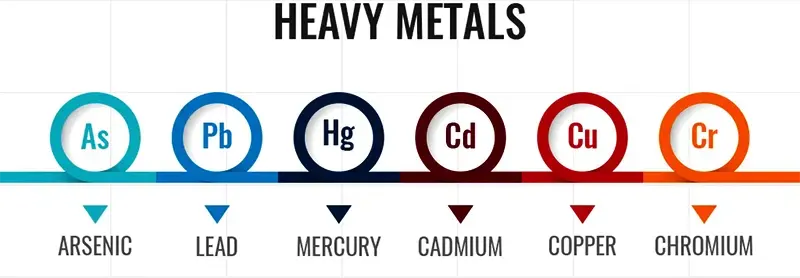
One potentially harmful ingredient that can be found in some tattoo inks is heavy metals. These metals, such as mercury, lead, and arsenic, can leach into the skin and potentially cause a variety of health problems.

For example, mercury can cause nerve damage, lead can affect the brain and nervous system, and arsenic can cause cancer.

It’s important to choose a tattoo ink that is free of heavy metals, as these ingredients can have severe and long-term health consequences.

Formaldehyde

paustenbachandassociates

Another potentially harmful ingredient that can be found in some tattoo inks is formaldehyde. Formaldehyde is a chemical that is used as a preservative in some inks, but it can also be toxic when it comes into contact with the skin.

It can cause allergies, skin irritation, and potentially even cancer. It’s important to choose a tattoo ink that does not contain formaldehyde, as it can have serious health consequences.

Coal Tar, Mineral Oil, and Parabens

Other potentially harmful ingredients that can be found in some tattoo inks include coal tar, mineral oil, and parabens. These ingredients can cause allergic reactions, skin irritation, and scarring, other adverse health effects.
It’s important to choose a tattoo ink that is free of these ingredients, as they can have serious health consequences.

It is very important to be aware of the ingredients in tattoo ink and choose a safe and high-quality product. Be sure to do your research and select a tattoo ink that does not contain harmful ingredients such as heavy metals, formaldehyde, coal tar, mineral oil, and parabens.

By making an informed choice, you can ensure that your tattoo is not only a beautiful expression of your personal style, but also a safe and healthy one.

What Qualities Make a Safe Tattoo Ink?

Choosing a safe and high-quality tattoo ink is crucial for both the short-term and long-term health of your skin.

Here are five key qualities to look for when choosing a safe tattoo ink:

Heavy Metal-Free

According to the International Agency for Research on Cancer, some carbon-based ink ingredients are possibly carcinogenic.

Some tattoo pigments contain heavy metals, such as mercury, lead, and arsenic, which can leach into the skin and potentially cause a variety of health problems.

It’s important to choose a tattoo ink that is free of heavy metals, as these ingredients can have serious and long-term health consequences.

Formaldehyde-Free

Formaldehyde is a chemical that is used as a preservative in some inks, but it can also be toxic when it comes into contact with the skin.

It can cause allergies reactions, skin irritation, and potentially even cancer. It’s important to choose a tattoo ink that does not contain formaldehyde, as it can have serious health consequences.

Hypoallergenic

Allergic reaction from tattoo pigment is relatively common and can cause symptoms such as redness, itching, and swelling. It’s important to choose a tattoo ink that is hypoallergenic, as this means it is less likely to cause allergies.

Non-Toxic

Some tattoo inks contain toxic ingredients that can harm the body when they come into contact with the skin. It’s important to choose a non-toxic tattoo ink, as this means it is less likely to cause negative health effects.
High-Quality

Not all tattoo inks are created equal, and some are of a lower quality than others. It’s important to choose a high-quality tattoo ink, as this will ensure that your tattoo holds up well over time and doesn’t fade or discolor quickly.
Safe and high-quality tattoo ink can affect the health of your skin. Look for an ink that is heavy metal-free, formaldehyde-free, hypoallergenic, non-toxic, and high-quality to ensure that your tattoo not only looks good but is also safe and healthy.

How Much Do High-Quality and Safe Tattoo Inks Cost?

gannett

In general, high-quality and safe tattoo ink brands tend to cost more than lower-quality or less safe inks. Here are two main factors that determine the cost of tattoo inks:

Ingredients

One factor affecting the cost is the ingredients used in tattoo inks. High-quality tattoo ink is typically made with more expensive ingredients, which can easily drive up the cost.

Brand

Another factor that can affect the cost of tattoo ink is the brand. Some tattoo ink brands are known for producing high-quality, safe, and long-lasting colors. Thus, they may charge higher prices for their inks as a result.

However, it’s important to keep in mind that price is only sometimes an indication of quality. That’s why it’s worth doing your research and looking at reviews and recommendations before making a decision to choose the best tattoo ink brands suitable for you.

Note: It’s important to keep in mind that the cost of tattoo ink is just one part of the overall cost of a tattoo; you should consider the cost in the context of the entire tattoo process as well.

High-quality and safe tattoo ink will likely hold up better over time and require fewer touch-ups, saving you money in the long run.

Tips on How to Find the Safest Tattoo Inks

A tattoo ink is an eternal ink that would remain on your skin for a lifetime. It’s one good reason why safety should be your top priority.

So if you are currently looking for safe tattoo ink manufacturers, here are five tips that will greatly help you with your search:

Look for Inks that are Approved by the FDA

The Food and Drug Administration (FDA) regulates tattoo inks and has approved some inks for use. Your best bet is to get inked only with products approved by this governing body.

If the ink you are considering is not on the FDA’s list of approved inks, it may not be safe to use.

Avoid Inks that Contain Hazardous Chemicals

Some tattoo inks contain chemicals that are known to be harmful to the human body. These chemicals can cause allergic reactions, skin irritation, and even organ damage.

To avoid these inks, look for inks made from natural ingredients and free of hazardous chemicals.

Research the Brand of Ink you are Considering

Many tattoo ink brands are on the market, and not all are created equal. Research the top brands you are considering to ensure that they have a good reputation and use high-quality, safe ingredients in their inks.

Ask Tattoo Artists for Recommendations

Your tattoo artist is an expert in the field and can provide valuable insight into the safety of different tattoo inks. Many artists have their recommendations so consider using the inks they suggest to be suitable for you.

Consider Using Tattoo Inks Made from Organic Ingredients

thebeardclub

Organic tattoo inks are made from natural ingredients and do not contain any hazardous chemicals. They are good options for those who want to minimize their exposure to potentially harmful substances.

Following these tips can help ensure that you are using the safest tattoo inks possible. It is important to remember that tattoos are a permanent decision, so finding the safest inks is essential to protecting your health and well-being.

Conclusion

Tattoos are a popular form of body art that allows people to express themselves and show off their personal style.

However, it’s extremely important to make sure that the tattoo ink you use is safe for your skin. Safe inks ensure that your tattoos stay longer and your skin stays healthy too.

How to Shrink an Ear Piercing Hole: Surgical + Natural Solutions

0

It is not uncommon for people to have stretched or enlarged earring holes, whether from wearing heavy earrings or from other factors such as aging or genetics. While some people may choose to embrace this as a personal style, others may want to reduce the size of their earlobes for aesthetic or cultural reasons.

There are two main ways to shrink an ear piercing hole: through repair surgery or through natural, non-invasive methods.

Read on to know the usual causes of ear piercing hole damage, the different types of ear hole surgery and natural repair methods, and ways to prevent earring hole issues to avoid similar issues in the future.

Earring Hole Repair Surgery

drfarrior

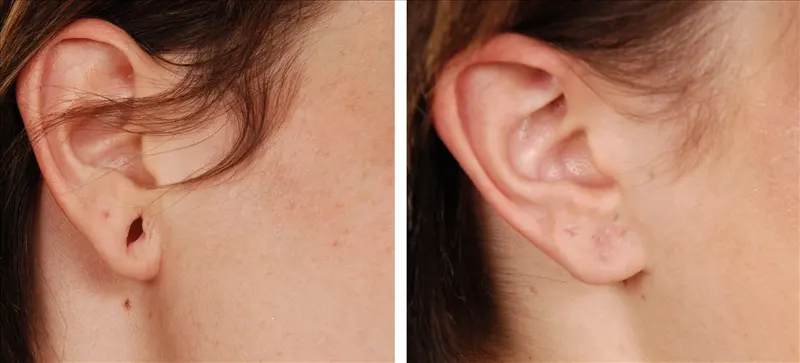
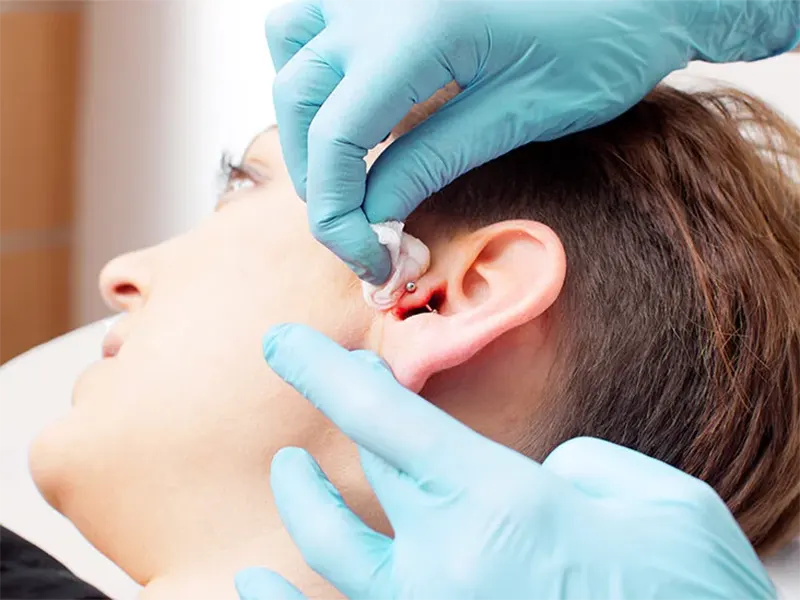
Earring hole repair surgery, also known as earlobe repair, is a common procedure that is performed to restore the appearance of the earlobes after they have been stretched or damaged.

It is important to note that an earlobe repair surgery is a major procedure that carries risks such as scarring, infection, and the possibility of not achieving the desired result. The healing process also varies – it may take a few months for it to close completely and fully heal.

Here are four types of earring hole repair surgery:

1. Earlobe Reduction Surgery

This procedure involves removing excess skin or tissue and reshaping the earlobe to reduce its size. It is often performed on people who have stretched earlobes due to the use of heavy earrings or other factors such as aging or genetics.

Earlobe reduction surgery can be done under local anesthetic and typically requires a short recovery time.

2. Earlobe Reconstruction Surgery

This procedure is used to repair earlobes that have been completely split or torn due to trauma or the use of heavy earrings.

It involves suturing the torn edges of the earlobe back together and may require the use of skin grafts or other techniques to heal and achieve a natural-looking result.

3. Earlobe Revision Surgery

This procedure is used to correct the appearance of earlobes that have been surgically altered in the past but did not achieve the desired results. It may involve the removal of scar tissue, the repositioning of earlobe tissue, or other techniques to improve the appearance of the earlobes.

Getting rid of scar tissue from ear holes helps reduce ear hole size. This procedure can also be done under local anesthesia, and the healing process can vary from person to person.

4. Earlobe Piercing at a Smaller Gauge

If you have stretched earlobes due to the use of heavy earrings, you may be able to repair the holes by gradually downsizing the gauge of your earrings.

This can be done by wearing smaller-gauge earrings and gradually increasing the size over time. This option requires patience and discipline, as it can take several months or even years to see significant results.

Ways to Shrink an Ear Hole Size Naturally

storyhippo

Not everyone wants to go through a surgical method to have earlobes repaired. So here are several natural and non-invasive options to shrink your ear hole size naturally.

1. Ear Lobe Taping

Earlobe taping is a non-surgical technique that is used to reduce ear hole size or the size of stretched or enlarged earlobes. It involves the use of medical tape to apply gentle pressure to the earlobe, causing it to gradually shrink in size over time.

Earlobe taping is a relatively painless and low-risk option for reducing the size of earlobes, and it can be done at home without the need for medical intervention.

However, it requires a consistent and long-term commitment to see results, as the tape must be worn constantly for several months or even years in order to achieve a significant reduction in earlobe size.

To perform earlobe taping, you will need medical tape and a pair of scissors. Start by cutting a small piece of tape that is long enough to wrap around the earlobe.

Next, wrap the tape around the earlobe, securing it in place. Make sure the tape is applied gently and does not feel too tight or constricting.

It is important to keep the tape clean and dry, as moisture can cause the tape to loosen or become less effective. Don’t wear heavy earrings while the tape is in place, as this can cause the earlobe to stretch again.

This method of earlobe repair is not a quick or easy process, and it requires patience and discipline in order to see results.

If you are considering earlobe taping as a way to reduce the size of your earlobes, it is important to get the services of a doctor or healthcare professional to determine if it is the right option for you.

2. Use of Ear Lobe Antibiotic Cream and Ointments

Some people have found success in reducing the size of their ear holes by using ear lobe creams, antibiotic ointment, and petroleum jelly that are specifically formulated to promote the healing and shrinking of stretched earlobes.

These products may contain ingredients such as vitamin E, aloe vera, and other natural substances that are known for their skin-healing properties. This is another method where you won’t have to experience pain in order to shrink your earring holes. 

3. Ear Lobe Plugs or Tunnels

jewelryshoppingguide

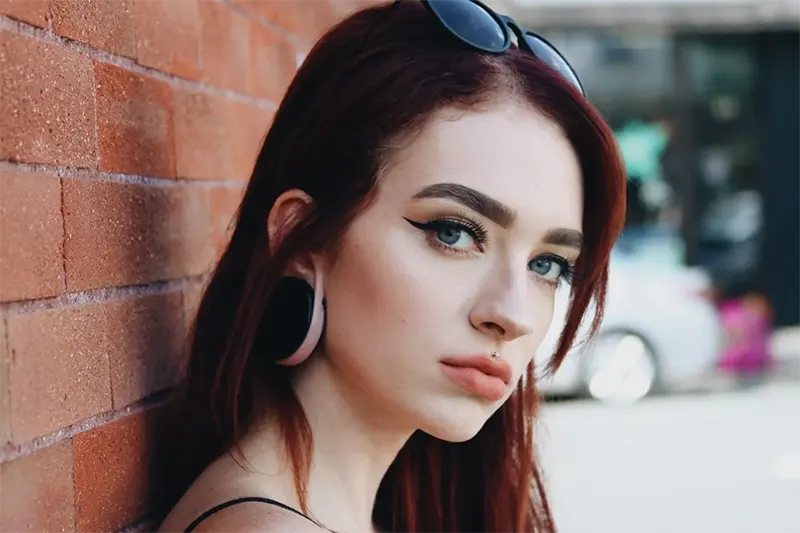
If you want to cover up stretched earlobes while they heal or shrink, you can try wearing earlobe plugs or tunnels. These are decorative pieces that are worn in the earlobe and can help to hide the stretched hole while also being a fashionable accessory that can enhance your look.

4. Massage and Ear Lobe Exercise

Some people have found success in reducing the size of their ear-piercing holes by massaging their earlobes and performing ear lobe exercises.

These techniques involve gently massaging the earlobes and using your fingers to stretch and contract the earlobe tissue in different directions. It is important to be gentle and consistent in order to see results.

Usual Causes of Ear Hole Problems

Problems with earring holes, such as stretched, damaged, or drooping earlobes, can be caused by a variety of factors. Torn earlobes happen accidentally, but some of the most common causes of earring hole problems include:

1. The Use of Heavy Earrings

Wearing earrings that are too heavy can cause the earlobe to stretch over time, leading to a larger ear hole. This is especially common in people who wear heavy earrings on a regular basis or who have thin or delicate earlobes. If you get your ears pierced, wear earrings that are lighter more often to avoid problems

2. Trauma

Trauma to the earlobes, such as getting them caught on objects or being pulled or tugged with too much force, can cause damage or stretching.

This can be especially common in people who participate in activities that put their earlobes at risk of trauma, such as contact sports or rough play. A tear in your ear holes might cause an open wound that might require surgery later on.

3. Aging

As we age, our skin becomes less elastic and more prone to sagging and stretching. This can cause the ear holes to become larger and lose their shape, leading to earring hole problems.

4. Genetics

Some people are simply born with thin or delicate earlobes that are more prone to stretching and damage.

5. Infections

Infections or irritation of the earlobes can cause swelling and damage, leading to earring hole problems.

Tips to Prevent Earring Hole Issues

healthline

As mentioned above, earring hole issues, such as stretched or damaged earlobes, can be caused by a variety of factors, including the use of heavy earrings, trauma, aging, and genetics. 

Here are some tips to help prevent earring hole issues:

1. Choose Earrings Carefully

One of the most common causes of earring hole issues is the use of heavy earrings. To prevent this, choose earrings that are lightweight and made of materials that are gentle on the skin. Avoid wearing earrings that are too heavy or have sharp edges that can damage the earlobe.

Having professional piercers for a new piercing is also highly recommended to avoid torn earlobes and to ensure that you heal completely and properly.

2. Avoid Sleeping in Earrings

It is important to remove your earrings before going to bed to prevent them from getting caught on bedding or other objects and causing damage to the earlobe.

3. Avoid Wearing Earrings that are Too Tight

Tight earrings can restrict blood flow to the earlobe and cause irritation or damage. To prevent this, choose earrings that fit comfortably and do not pinch or pull on the earlobe.

4. Use Ear Lobe Creams and Ointments

Using ear lobe creams and ointments that are formulated to moisturize and nourish the skin can help to prevent the earlobes from becoming dry, irritated, or damaged.

These products may contain ingredients such as vitamin E, aloe vera, and other natural substances that are known for their skin-healing properties.

5. Avoid Trauma to the Earlobes

Trauma to the earlobes, such as getting them caught on objects or being pulled or tugged, can cause tear, open wounds, damage, or stretching. To prevent this, be gentle with your earlobes and avoid activities that could cause a wound in your ears.

By following these tips, you can help to prevent issues in earring holes and keep your earlobes healthy and looking their best.

Conclusion

It is important to note that reducing the size of ear holes is not a quick or easy process. It requires patience, commitment, and possibly even medical intervention.

Make sure to do your due diligence and properly learn about the different methods to shrink ear holes. The internet provides a wealth of information you can leverage. YouTube is also a good place to watch an earlobe repair explanation video on top of reading articles online.

If you are considering either surgery or natural options, it is important to consult with a qualified plastic surgeon, expert, or doctor to determine the best course of action for your individual needs and goals.

Do Keloids on Piercings Go Away? Prevention & Remedies

Pain isn’t the only thing you have to consider when getting body piercings. At times, the process comes with negative effects – just like keloids.

Keloids rarely go away on their own. In most cases, they continue to grow for months or for some years. 

Although keloids are rarely harmful, they could be a physical annoyance that you just don’t want around. So if you’re bothered about the keloids on your piercings and want to get rid of them, you should keep reading. 

What Causes Keloids on Piercings?

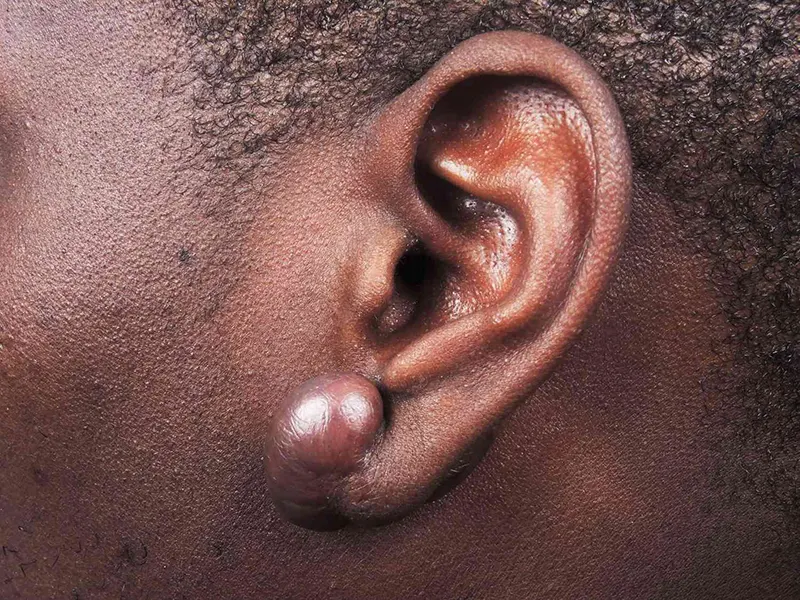
wikimedia

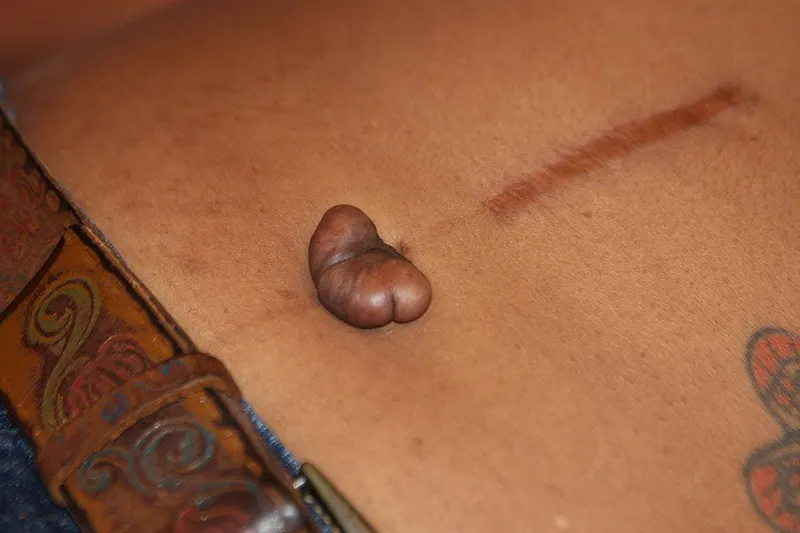
Keloids on piercings are caused by the injury or piercing itself. Technically, a piercing is an open wound. As the piercing heals, the fibrous scar tissue replaces the old tissue.

For some people, especially those who are keloid formers, the body produces too much scar tissue. For some, this may result in hypertrophic scars. 

These extra tissues then spread out from the piercing, causing that bump, which we all know are keloids or what others call as piercing bumps. A keloid is considered as an abnormal wound healing.

For some, it may not be noticeable at first. Keloids may take several months, sometimes years, to be noticeable. 

So if you notice a lumpy scar on the pierced area, that’s most likely a keloid or a piercing bump. Keloid scarring may also occur for nose, philtrum piercings or any other body piercings, not ear piercings alone.

In rare cases, tattoos may cause keloids as well. It won’t cause any damage, but it can be annoying to look at. 

How to Avoid Keloids on Ear Piercing

If you want your ears pierced and are afraid to develop keloids, then you should know that there’s no surefire way to avoid them. The best thing to avoid piercing bumps is not to have your ear pierced at all.

But if you want to have your ears pierced, or have a body piercing, then you have to pay close attention to the piercing site. Check your piercing every day for a raised scar or if your ear lobe starts to thicken. The keloid may start to develop, so you need to act quickly. 

What you should do is remove the earrings immediately and start wearing a pressure earring. Pressure earrings put pressure on the earlobe and the surrounding skin to stop the piercing bump from growing any bigger.

Do Ear Keloids Go Away on Their Own?

Keloid scars on ears rarely go away on their own. In rare cases, keloid scars may disappear over time, even without treatment. A keloid and an infected piercing may co-occur, and this is something you must address immediately. Fortunately, there are treatment options that can help with removing a keloid scar. 

health

There are home remedies you can try, or you can opt for medical treatment from a healthcare professional. However, home remedies may not be an ineffective treatment. Also, even after medical intervention, there’s the chance that the keloid formation may grow back. 

Can You Pop an Ear Keloid?

No! You cannot pop an ear keloid. For the record, an ear keloid is a type of scar tissue. Keloids do not contain pus for you to pop it like a pimple. Popping an ear keloid can cause scarring and further skin damage, which may lead to an infected piercing. 

How Do I Get Rid of a Piercing Keloid?

If you want to get rid of a piercing keloid, it is best to talk to a medical professional right away. It is best for a medical professional to confirm and diagnose the presence of the keloid rather than jumping into home remedies, which are most likely ineffective. 

Once your doctor confirms the presence of keloid scars, treatment may be prescribed. The next part of this post will discuss the treatment and interventions to get rid of keloids.

It is important to remember that these treatments are not just for keloids caused by piercings alone, but for all keloids in general, regardless of the nature of the cause. 

Topical Medication

There are two types of topical medication that are likely to be prescribed for a keloid scar — corticosteroids and topical silicone gel. Corticosteroids are applied to help reduce the inflammation, irritation, and tissue damage from the piercing. 

Depending on the severity of the keloid, if a topical application may not be enough, the doctor may inject corticosteroids into the keloid. It’s usually an outpatient procedure.

Corticosteroid injections are scheduled every four to six weeks. Some doctors may recommend up to four injections, sometimes more. 

In conjunction with topical or injectable corticosteroids, topical silicone gel may be prescribed as well. As mentioned earlier, keloids form due to excess tissue formation caused by the piercing. A silicone gel addresses this issue.

A topical silicone is applied to the piercing site to regulate collage production and inhibit the overgrowth of scar tissue. 

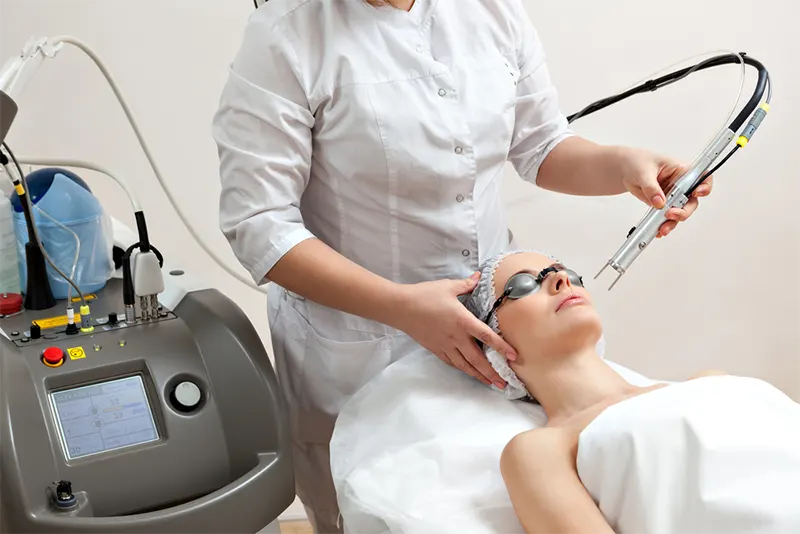
Laser Treatment

zwivel

Thanks to the advances in the beauty industry, laser treatments are now available to shrink keloids. Pulsed-dye laser treatment in particular may be recommended by your doctor to flatten the raised scars. 

Pulsed-eye laser treatment is delivered in several sessions at a 4 to 8 weeks intervals. Most dermatologists would recommend laser treatment in conjunction with corticosteroid injections for faster healing. 

Scar Freezing

Another nonsurgical intervention to remove keloids is through scar freezing or Cryotherapy. In this procedure, the keloid is exposed to extreme cold, where liquid nitrogen is used. Extreme cold from the liquid nitrogen causes the keloid to swell, then ooze a yellow blood-tinged fluid.

Several days after the treatment, the keloid will dry out, the keloid shrinks in size, and eventually be fully removed. Cryotherapy is one of the most proven effective ways for keloids to shrink, but it may be uncomfortable for some.

Also, Cryotherapy is not a one-time session. Several sessions may be recommended to achieve normal-looking skin. 

Surgical Removal

If you want an instant remedy to remove keloids, then surgical removal is the best option. You may ask, is this an outpatient or inpatient procedure?

Well, it depends on the size of the keloid. For small keloids, it can be done in an outpatient setting using local anesthesia. The doctor will use a surgical knife to remove the small keloids.

For larger keloids, it is best for a dermatologist to work on this. The surgical removal of large keloids is done in an operating room, wherein general anesthesia will be given during the procedure.

In some cases, skin grafting will be performed. Surgical removal of keloids is also recommended if nonsurgical options like laser and steroid injections are not responsive. 

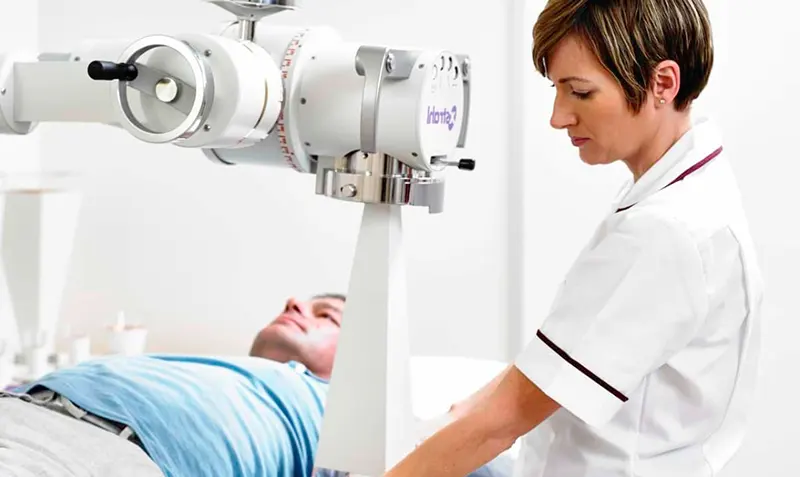
Radiation Therapy

After successful surgical removal of the keloid, your doctor may recommend Radiation Therapy. As mentioned, keloids have the tendency to grow back even after treatment, even after surgical removal. 

xstrahl

To avoid the keloids from growing back, Radiation Therapy may be recommended by your doctor.

During radiation therapy, keloids are exposed to strong radiation beams. Several sessions may be recommended to ensure that the keloid does not grow back. 

Home Remedies to Get Rid of Keloids

When you notice keloid formation, it is recommended to see a medical professional right away. However, if seeing a doctor is not in your cards at the moment, there are home remedies you can try. 

Aspirin

A study conducted in 2015 suggests that topical use of crushed aspirin tablets can help treat keloid by reducing the size and pigmentation. Here’s what needs to be done:

  • Crush three to four aspirin tablets.
  • Mix the crushed aspirin in water to form a paste.
  • Apply the paste to the keloid and let it sit for at least one hour.
  • Do this once every day until the keloid starts to reduce in size and pigmentation.

Garlic

Garlic has a similar mechanism of action of aspirin. Simply take three garlic cloves and crush them. Apply the crushed garlic to the keloid area and let it sit for 15 minutes.

After 15 minutes, wash it off with water and apply Vaseline or moisturizer. If in case your ears would react badly to the garlic, wash it off immediately and discontinue the use.

Honey

mendwell

Honey has anti-inflammatory effects that help reduce keloids. In short, honey acts like steroids and aspirin combined in one.

For this home remedy, apply organic honey on the keloid area and let it sit for a while. wash it off after 15 minutes and repeat the process two to three times a day.

Concluding Thoughts

To sum it all up, keloids caused by piercings are scar tissues that rarely go away. Treatment, may it be a home remedy, nonsurgical or surgical intervention can help treat keloids.

In case you plan on having a piercing, monitor it closely and intervene right away if you notice keloid formation. 

If you already have a keloid caused by a piercing and want to get rid of it, talk to a doctor right away. Early detection and intervention will prevent the keloid from getting any bigger, darker, and undeniably annoying.

Can You Remove Tattoos At Home? (Risks + Safer Options)

0

Years after that wild night you got your animal tattoo, you might think it is time to take it off. Unfortunately, you don’t have the money to get that expensive treatment to get rid of your embarrassing tattoo once and for all. You might be thinking, can you remove tattoos at home?

The concept of DIY techniques typically works, but not for tattoo removal. Although it may seem inexpensive and enticing, it’s really not a good idea to do it at home. Given the danger of at-home tattoo removal, you might cause more harm than good.

Here are the things you should consider before pursuing the idea of removing tattoos at home.

6 Tattoo Home Removal Methods That Just Don’t Work

manofmany

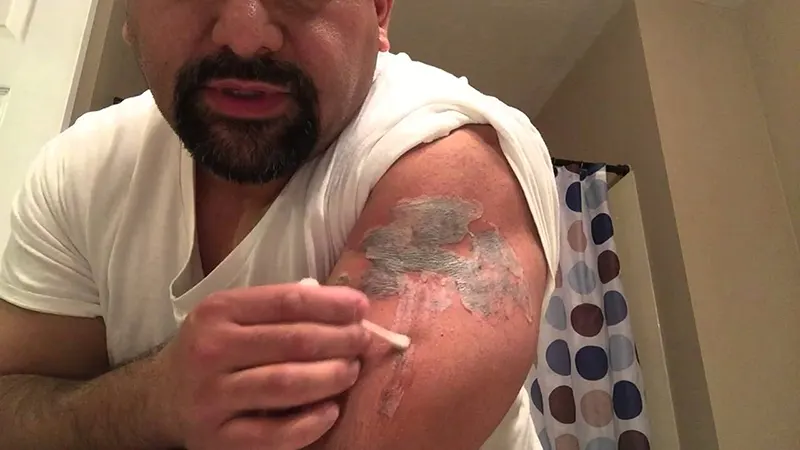
Some articles or blog posts you have already read online may suggest ways to lighten up or permanently remove your unwanted tattoo. Tattoos are etched deep down to your dermis, the middle layer of the skin underneath the epidermis.

However, most DIY tattoo removal alternatives penetrate just the first layer of the skin or the epidermis.

Some methods on the list may lead to skin damage and leave unlikely side effects, so be careful.

1. Aloe vera gel and yogurt

dep365

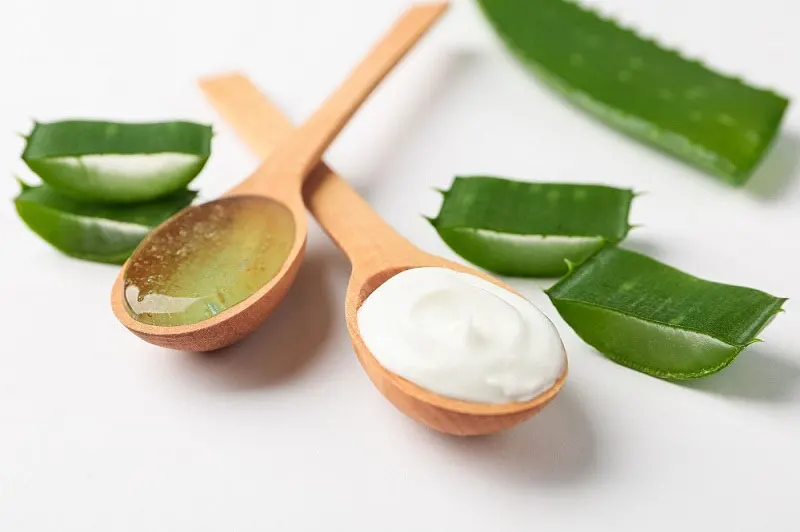
A lot of people claim aloe vera and yogurt can lighten up your tattoo in a natural way. To tell you truthfully, they do not work at all! 

Even though these are painless and safe ways, there are no medical claims that they work. However, aloe vera and yogurt might be effective if you want to moisturize your skin or calm some stubborn skin rashes down.

2. Sand

Sand
kelenytopsoil

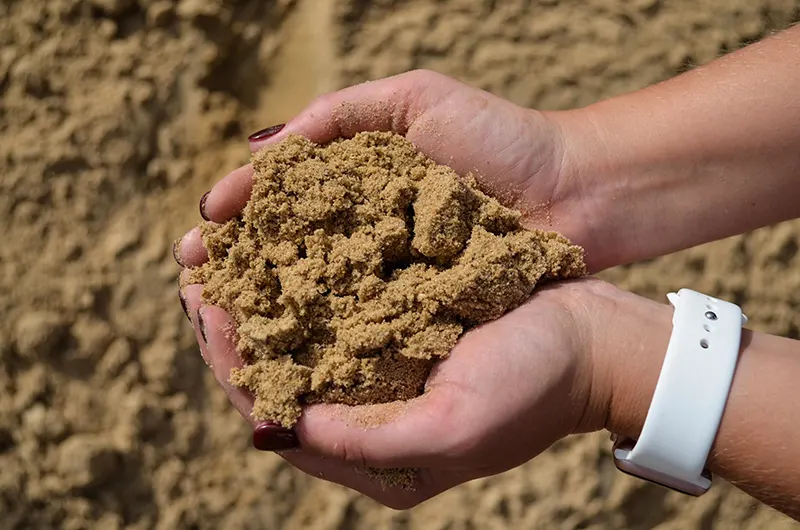
One of the most painful home tattoo removal methods is using sand—people who rub sand on their skin attempt to imitate the effects of dermabrasion performed by professionals.

However, there is no proof that sand is beneficial as of right now. Instead, it could cause wounds, rashes, skin irritation, and infections.

3. Lemon Juice

Lemon-juice
alphafoodie

Lemon juice is frequently used in at-home skin care recipes as an essential DIY skin whitening agent. The component is highly acidic, though, which can cause rashes and sensitivity, primarily when employed with sun exposure.

Applying lemon juice won’t be able to dissolve the ink. This will be painful, at the very least. The worst-case scenarios involve infection and scarring as a result of doing this.

4. Salicylic Acid

popsugar

Salicylic acid is used as an exfoliating ingredient in many skin care products. Although the chemical helps to exfoliate dead skin cells, it only does so topically. Salicylic acid won’t penetrate the dermis to remove tattoo pigments, but you may detect a slight fading.

5. Glycolic Acid

sesenspa

Because it can assist in removing the top layer of skin, glycolic acid is a more potent kind of alpha-hydroxy acid (AHA) than salicylic acid. By removing many layers of skin, acid peels like glycolic acid peels, TCA peels, and acid injections may lightly fade tattoos. 

The chemicals have harmful and frequently long-lasting adverse effects, much as creams for getting rid of tattoos. The component is ineffective for tattoo removal because it once more only affects the epidermis.

6. Burning

tattoofilter

Some people try to burn off their tattoos with a blow torch or a lighter in a desperate bid to get rid of them. The intention is for the tattoo to become a scar and fall off. 

Tattoo ink is still visible even after scar forms because it is deeply ingrained inside the dermis. You run the risk of nerve injury, infection, scarring, and scarring if you’re ignorant enough to try this procedure.

The lesson here is simple: never use a kit or any other method at home to remove a tattoo. Laser tattoo removal is the only method that can be used to safely and effectively remove a tattoo.

Is It Safe to Remove A Tattoo At Home?

The Food and Drug Administration (FDA) has not approved home tattoo removal methods. Aside from the dangerous side effects of removing unwanted tattoos at home, these means still lack efficacy and safety.

Salabrasion or sand abrasion is a risky, useless method for getting rid of tattoos. It involves rubbing a salt solution on the skin, removing the epidermis, and leaving the skin raw and red.

If you do not want to risk yourself with a possible infection, permanent scarring, or nerve damage, never try removing tattoos on your own. 

According to the theories, the pigment from the tattoo will fall off with the skin as it scales and falls off over time.

A piece of news from CBC Radio-Canada reported that at least 18 ladies who wanted their tattoos removed are now permanently scarred due to their skin being severely burned during the removal procedure.

Are DIY Tattoo Removal Creams Effective?

Before heading on to the idea of gimmicky tattoo removal cream, think twice. These creams claim to lighten the appearance of permanent tattoos.

Dr. Robyn Gymrek, the board-certified dermatologist at UnionDerm in New York City, said, “They claim to remove tattoos by bleaching or peeling away the top layer of your skin and allowing for the release of tattoo pigment.”

Why Do Most People Assume Creams Work?

People-Assume-Creams-Work
tattoodo

Most tattoo removal creams contain trichloroacetic acid (TCA), known for removing the epidermis’ outermost layers.

However, it can only reach the dermis when given in high doses. TCAs can only be used by medical specialists and have FDA approval.

As a result, TCA cannot be used at home, according to FDA. It is not regulated, and the FDA has not given its sale in any marketplace its approval.

Tattoo removal creams are more of a misconception than anything else, as you may have figured by this point. While the creams’ recipes claim to be quite effective, permanent ink is more likely to be lightened than wholly removed. In terms of efficacy and safety, they are rated zero. 

Tattoo removal lotion is especially harmful to deep skin tones because it’s practically hard to apply only when you have ink. Do not try making a homemade tattoo removal cream, too! Instead, you risk lightening the surrounding skin after the healing process.

Does Hydrogen Peroxide Fade Tattoos?

Hydrogen peroxide can lighten tattoos. 

However, as said, it only penetrates the epidermis part. It cannot go into the dermis layer, and as a result, most of the people who have already tried this one have seen lightening effects to an extent only. 

They said that the ink was still visible below the surface. Remember that it is a first aid product. Too much use of it may irritate your tattoo. 

What Is The Fastest (Safest) Way to Remove Tattoos?

While DIY methods and natural remedies may seem a great way of removing tattoos at home, do not be gullible. Opt for professional tattoo removal instead.

Remember that the main worry when attempting tattoo removal at home is that if something goes wrong, you won’t have access to assistance or a qualified medical professional.

Here are the professional tattoo removal methods recommended by medical professionals and aestheticians.

Laser Tattoo Removal

Laser-Tattoo-Removal
kevinchua

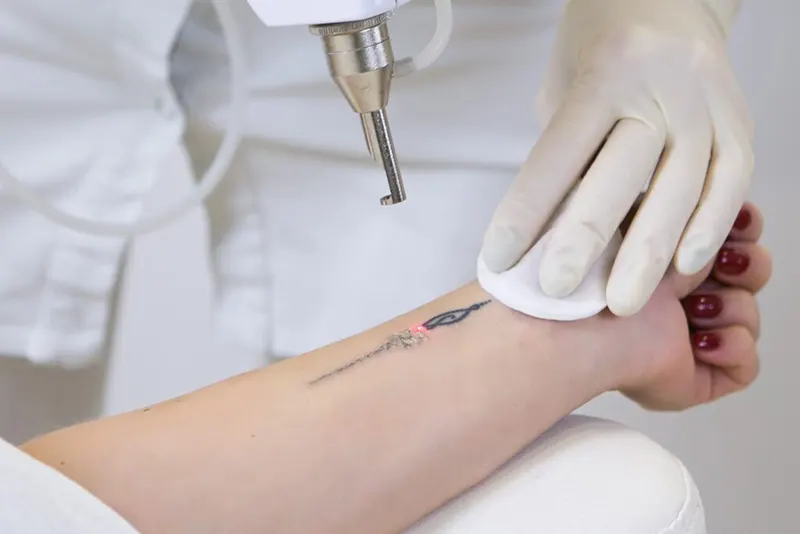
Laser tattoo removal or Q-switched Lasers is the most popular, most effective, and safest way to remove your tattoo. These lasers deliver a brief burst of intense heat that breaks down the ink in the skin into tiny particles, which are then removed from the skin by macrophages.

The number of treatment sessions may depend on the size and location of your tattoo. Darker skin generally requires more treatments, and after removal, it may experience more extreme hypo or hyperpigmentation, according to her.

Surgical Removal

stylecraze

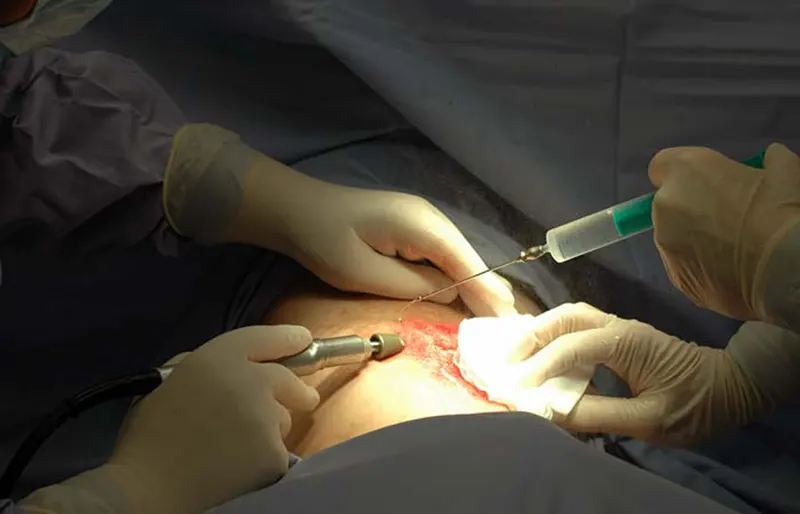
Surgical removal is only recommended for small tattoos because although surgical tattoo removal works, it leaves a scar. A local anesthetic injection numbs the skin before surgical removal.

Using a scalpel, the tattoo is removed, and the skin’s edges are sewn back together. Antibacterial ointment used after the surgery aids in healing.

Dermabrasion

drnumb

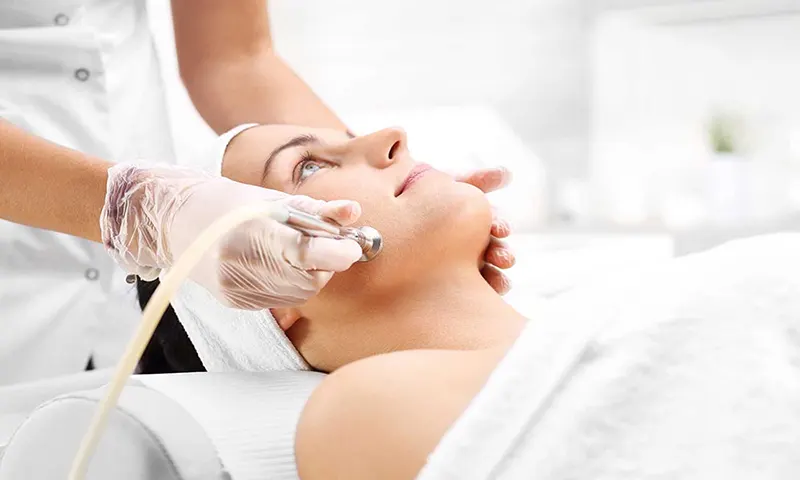
The tattooed location is often cooled until it becomes numb during dermabrasion. After that, a high-speed rotary tool with an abrasive wheel or brush sands the tattooed skin to deeper levels. This makes it possible for the tattoo ink to peel off the skin.

Dermabrasion isn’t popular because of its uncertain consequences and less effective outcomes than laser tattoo removal or a laser removal and excision combination.

After the surgery, the affected area may feel raw and uncomfortable for a few days. It may take two to three weeks to recover.

Takeaway

The top layers of skin are commonly removed by using dermabrasion equipment or the dangerous acids present in many of these so-called tattoo removal kits. As a result, you’ll probably get scars and discolored skin.

The top layers of your skin must first be removed with a dermabrasion tool, per the instructions of one well-known tattoo remover, before an unknown gel may be applied to your tattoo. Does that seem trustworthy?

Again, professional tattoo inks are firmly embedded into the dermis, rendering at-home tattoo removal treatments ineffective. Simply peeling off the top layers of skin wouldn’t even have any impact on the majority of tattoos.

Only laser removal can safely and effectively penetrate the skin and remove even the most unwanted tattoos.

Can Tattoos Cover Stretch Marks? Types + Things to Consider

Even though having stretch marks is common, a lot of people are still not comfortable having them. Some use creams and undergo different procedures to get rid of the marks while others choose to get tattoos over them. But can tattoos effectively cover stretch marks?

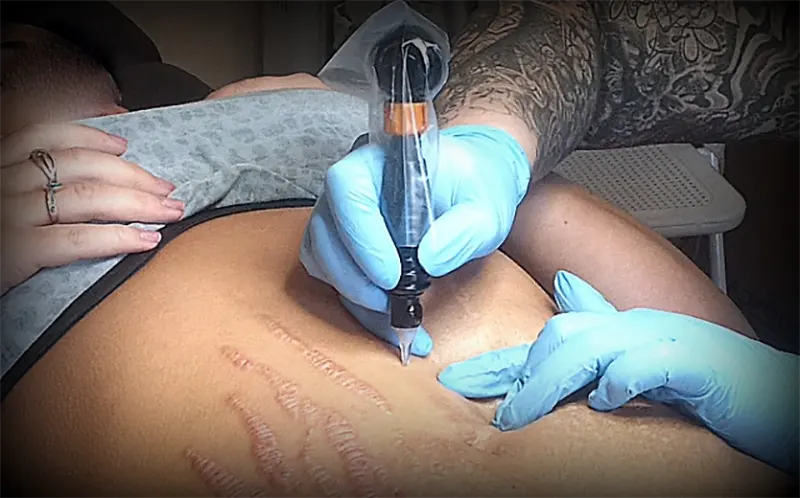
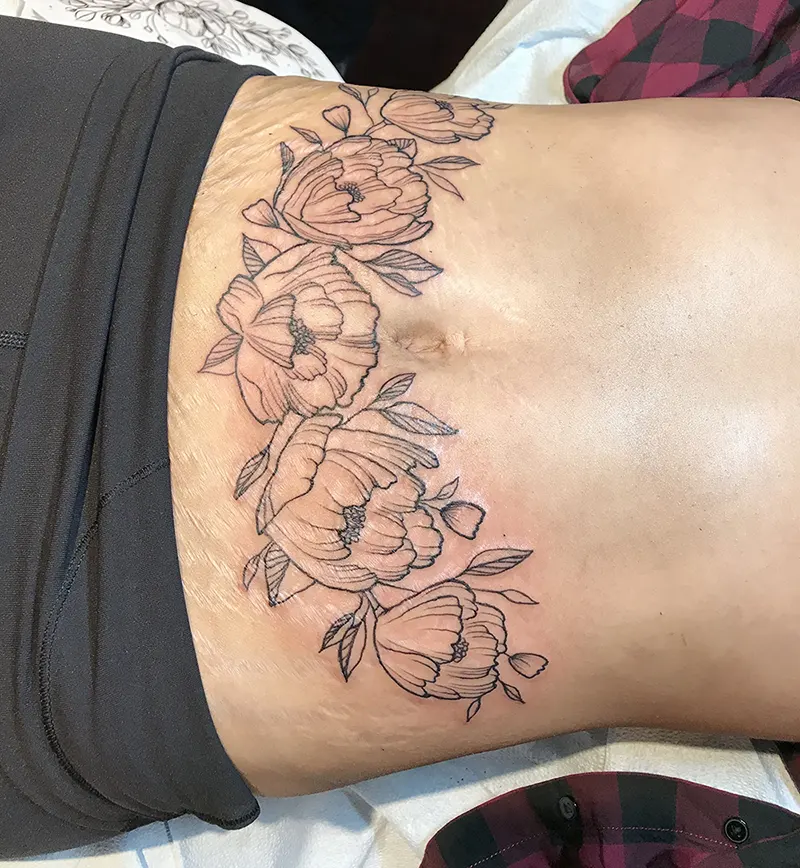
Yes, one of the fastest ways to hide stretch marks is by tattooing. There are two types of tattoos used by artists to cover stretch marks — traditional and camouflage. The traditional involves the use of monochrome inks while the camouflage applies pigments similar to your skin color.

This guide will help you understand how tattooing over stretch marks works and if you are ready to have one.

Can Stretch Marks Be Covered By A Tattoo?

Can-Stretch-Marks-Be-Covered-By-A-Tattoo
skinconfidence

A lot of tattoo artists are already using tattoos to cover stretch marks. There are two types of stretch mark tattooing: traditional and camouflage or the nano color infusion method.

Traditional Tattooing

Traditional tattoos, often American, Western, or Old School, are distinguished by their crisp, black borders, vibrant hues, and slight shading. It is one of the most daring and recognizable styles because of these critical components.

In a traditional tattoo, stretch marks are covered with whatever design or image you like the artist to draw on your skin surface. Thus, with this type of stretch mark tattoos, stretch marks can be covered up or made to look incredible with a lovely tattoo design, which is the whole point of getting a tattoo over stretch marks.

Camouflage Tattooing

On the other hand, the nano color infusion method works primarily by taking the client’s natural skin tone and mixing a pigment or ink that will match the skin tone. 

Here are the typical steps on how they do the whole process:

  1. The treatment room is prepared and disinfected for hygienic reasons.
  2. The room should be warm and should have an ample amount of natural lighting. The therapist should have at least one light directly to the treated area. This will help them select the right shade of pigment.
  3. They will then prepare the pigments and pigment rings, cotton pads, cartridges, and the device.
  4. Make sure they explain the procedure to you before delving into the process.
  5. Then, they determine the skin color of the client. 
  6. Next, the tattooist makes the ink that resembles the skin shade of the client. For some artists, it takes four different shades to create an ink that matches a client’s skin tone. 
  7. After that, they head on to delicately tattoo the stretch marks.
  8. They must make sure to put the tattoo ink deep into the dermis, the second layer of the skin. By doing so, the client enjoys a long-lasting tattoo. 

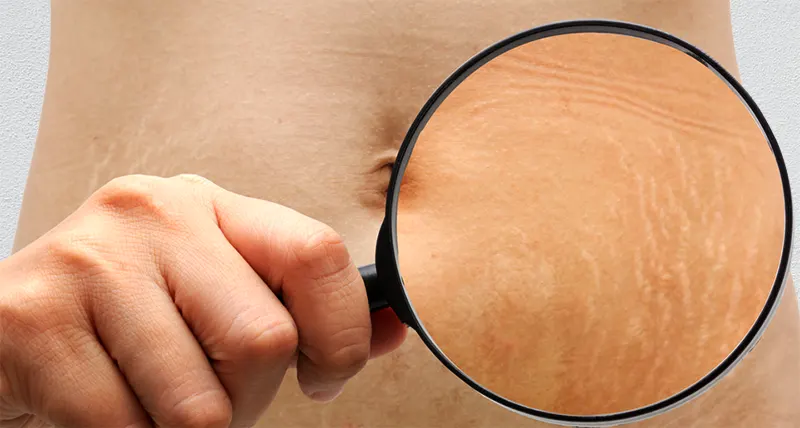
Basically, when you have a stretch mark, you have these cracks on your skin that appear to be lighter than your original skin color. The process is like patching up these cracks and matching the lighter lines of ink to your skin shade.

Things To Consider Before Getting Tattooed Over Stretch Marks

Not all stretch marks are ready to be concealed by a new tattoo. Here are the considerations you need to understand before putting a tattoo over stretch marks:

The state of the stretch marks

The-state-of-the-stretch-marks
suara

If you have fresh stretch marks or they have just developed or are raised stretch marks above the surface, there is little chance of having a tattoo. The tattoo artist would have difficulty inking over damaged skin. Plus, tattooing over stretch marks would be incredibly painful if you do not have your stretch marks fully healed first.

The stretch marks’ color

If you are red or purple, it might be challenging to cover them up with stretch mark tattoos. Some therapists recommend an FDA-approved serum for toning down the color.

Stretch marks of this color also suggest that they have only started to form, making tattooing them painful, as previously discussed. After the red or purple stretch marks are gone, they will require you to go back for the session.

The stretch marks’ length and width

Large stretch marks are more difficult to cover up with tattoos. The tattoo ink’s inability to completely conceal or cover up wide stretch marks is the cause of this. Additionally, if the stretch marks are more significant or have a particular shape, you will have to wait longer and choose your design carefully to ensure complete coverage.

Potential, upcoming physical changes

It could be best to postpone tattooing over stretch marks if you intend to build muscle or begin a pregnancy. The stretch marks you currently have, particularly in the stomach, thigh, and buttock regions, will change as your body changes. 

Before getting the stretch marks tattooed, it is preferable to reduce weight. Your stretch marks may become smaller due to weight loss, making it simpler to treat and cover them with a tattoo.

Therefore, you should take the following actions before choosing to get a stretch mark tattoo:

  • Determine whether the stretch marks on your body are new or fully healed
  • Determine if the skin is sunken or raised by running your fingertips over the marks to reveal whether the skin is higher or lower than the skin surface
  • Determine the stretch marks’ color
  • Describe the stretch marks’ length and width
  • Determine the reason behind their emergence (whether the cause is pregnancy, weight gain or loss, surgery, or other body changes)
  • Determine whether you intend to have rapid weight gain or lose weight or muscle in the future

Does Tattooing Over A Stretch Mark Hurt?

Does-Tattooing-Over-A-Stretch-Mark-Hurt
healthline

The pain is subjective to the tolerance of the patient. However, most people who had already experienced this procedure said that they did not suffer from immense pain. You will feel a prickling sensation. And, if you are a person who already has tattoos, you know what to expect in this process.

Yet, there is a general rule for getting a tattoo over stretch marks. If you have unhealthy and damaged skin, tattooing stretch marks tend to be a more sensitive and painful process.

It’s best to wait till your skin is healed. Also, the newer the stretch marks, the more uncomfortable the process. On the other hand, if you have healthy skin and aged stretch marks, the procedure and the healing process will go just smoothly.

Moments after you get a tattoo, you will notice some redness and swelling around the same place. To make the healing faster, rub a little bit of ice on the surface. It will subside after a few days. 

So, can you get a tattoo to cover your stretch marks?

If the stretch marks are entirely healed, and the skin’s color hasn’t changed, we advise persons with stretch marks on their stomach, thighs, and buttocks to get a stretch marks tattoo.

Can Every Tattoo Artist Create Tattoos to Cover Stretch Marks?

Only a certified tattoo artist can perform the treatment, and all hygiene conditions must meet the standards. Ensure that your therapist observes proper sanitary practices to avoid infections and other skin problems due to unhygienic reasons.

Observe if they are wearing the following:

  • Face shield
  • Medical-grade gloves and disposable sleeves
  • Proper attire for the procedure

Therefore, be sure to consider all of these things when searching for a suitable tattoo artist:

  • Whether a tattoo artist has success covering scars and stretch marks with ink
  • Whether the tattoo artist can change the tattoo’s style and color to accommodate stretch marks
  • Whether the tattoo artist is willing to keep an eye on the tattoo’s healing
  • The tattooist’s willingness to make changes if the tattoo isn’t healing and going as anticipated

Will More Stretch Marks Appear After Getting a Tattoo?

Will-More-Stretch-Marks-Appear-After-Getting-a-Tattoo
le dinh

This is not medical advice, but it’s always feasible that new stretch marks gradually develop in the same area where you had a tattoo done if it was on or near stretch marks. You better ask your tattoo artists what their plans are if this happens.

Final Thoughts

Tattoos are not only recommended for stretch marks but also for lighter scars. This procedure helps resolve an aesthetic issue and thus, has become increasingly popular and cost-effective over the years.

Many women consider tattooing over stretch marks and scars to gain more confidence, especially when wearing more skin-revealing clothes.

Stretch marks can be covered up and made to seem attractive with tattoos. Yet, making sure you communicate with your tattoo artist is one of the most crucial factors to take into account while getting a tattoo over stretch marks. Make sure the tattoo artist has some knowledge of dealing with tattoos over stretch marks.

The tattoo artist’s job and duty is to do the work in the finest manner possible, so it’s a good idea for them to have some experience in this field.

Keep going if your stretch marks seem to be in a good state; if not, some tattoo artists are renowned for being skilled at handling this challenge. Before you get a tattoo procedure, consult a physician to determine if you have health issues and allergic reactions.

Nail Art Brushes and Their Uses: A Beginner’s Guide

0

Doing your own nail art is such a rewarding and fun experience. Plus, it’s a great way to express yourself and your creativity.

However, creating nail art isn’t that easy. Without the right tools, you’ll have a hard time creating the design you want. And when you fail to do the art you’re aiming for, you may end up feeling frustrated.

To help avoid that, below is a guide to understanding nail art brushes and their uses so you’ll know exactly which tool to grab when doing your nails.

brokemynail

What Types of Brushes Are Best for Nail Art?

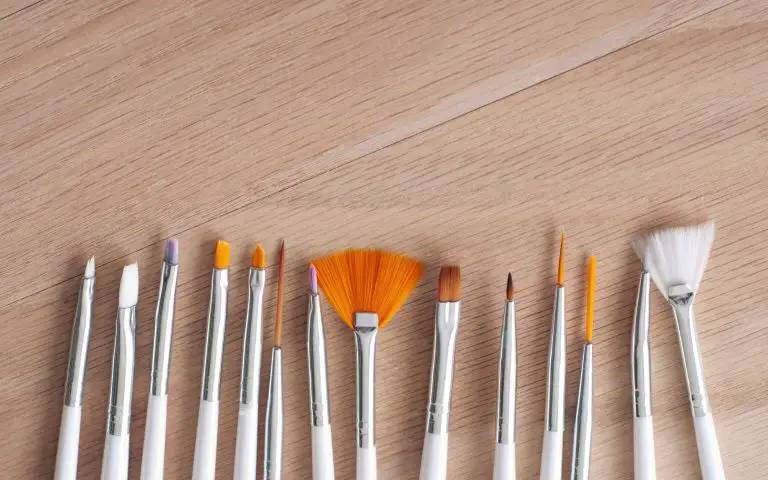
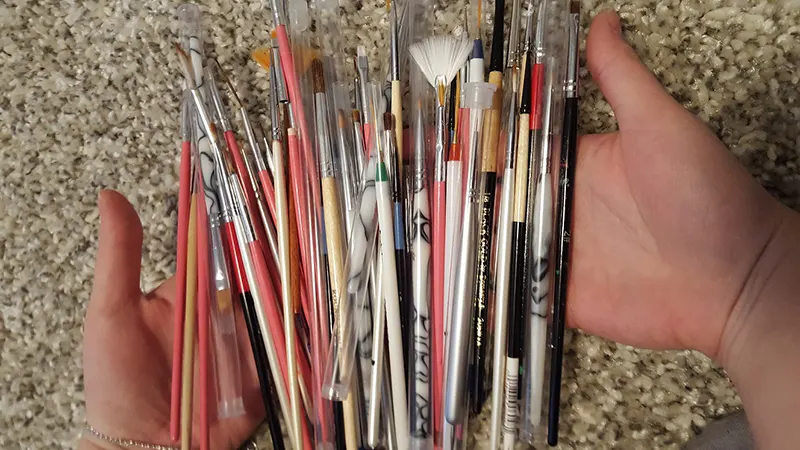
A nail art brush set commonly contains 15 pieces of varying kinds of brushes. Bristles of nail brushes are either made from natural hair or silicone. Some may have synthetic bristles. You have the option to buy nail brushes individually or in pieces. 

Here are the different types of nail art brushes:

1. Round Brush

A round brush is the most commonly used nail art brush and the easiest one to use. 

Round brushes are used when applying nail polish. They’re also useful in making excellent 3D nail art and large designs.       

2. Striper Brush

A striper brush is also called a liner brush because it has long bristles with short, rounded, and pointed tip. 

Because it’s thin, it’s a great tool when making straight lines. With it, you can also create stripes, and plaid art or checks. If you want to have nail art with animal patterns such as zebra or tiger prints, this is the brush you should pick.

Aside from making lines, this nail art brush can also be used to make other intricate designs and patterns such as geometric designs. It’s generally available in various lengths and sizes, but most sets of nail art brushes contain three pieces of liner brushes.

3. Stripette Brush

The stripette brush is smaller than a striper brush which makes it handy when creating shorter vertical and horizontal lines. It’s perfect for netting designs on nails.

4. Flat Brush

The flat brush is also referred to as a shader brush or gel brush. With short bristles and square endpoints, it can help in making striping stroke patterns or creating long fluid strokes on your nails.

The flat brush is called a gel brush because it’s often used when working on gel on nails. In a set of nail brushes, you can get 2 to 3 pieces of this brush.

5. Angled Brush

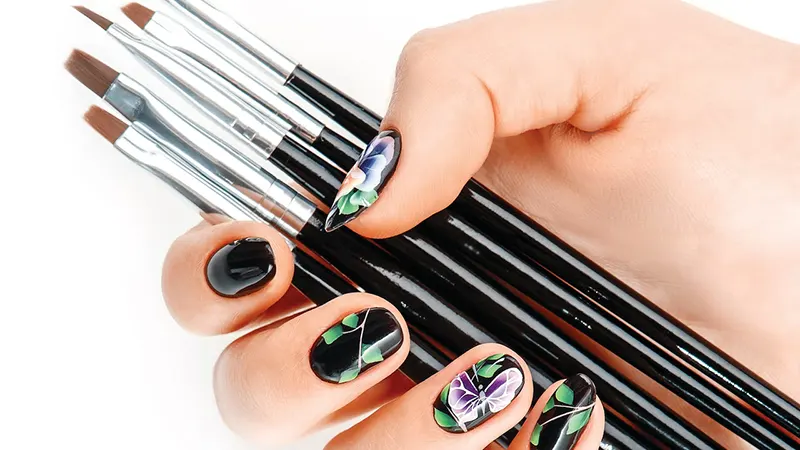
Double loading a nail brush with two colors is easy with an angled brush. If you are making nail art flowers, this nail art brush can efficiently make a one-stroke on your nail.

6. Fan Brush

The fan brush is a multi-functional and medium-length brush. It can be used for shading, creating swirls, as well as sprinkling glitter on nails. You can make ombre effects and stroked patterns with it as well.

Plus, you can also use a fan brush to remove excess glitter or flock powder from the nails. Here are some glitter nail designs that you may want to check out.

7. Detailing Brush

nbcnews

Nail art is about details and having a detailer brush in your nail brush set is a must! 

It may be the smallest brush in your collection, but the detailer brush provides a very good precision effect on your nails. You can easily make several nail art masterpieces with the detailing brush.

You may want to keep on hand a crooked detailer brush. This is a short-length round brush with a flat composition. It has an angular tip and angled shaft which helps make fine nail art details. This is best used for complex angle designs.   

8. Dotter Brush

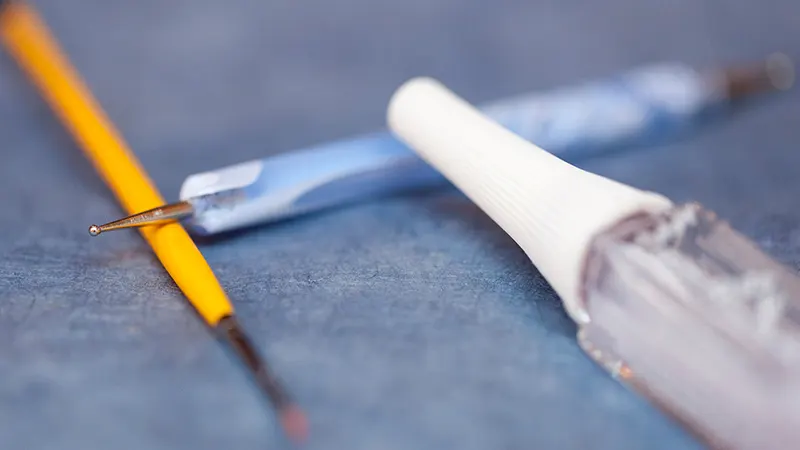
A dotter brush or the marbler brush has a very small head tip at one endpoint that helps you make small dots patterns on your nails. The other endpoint of the brush has a round shape and a thick point which helps in blending colors together.

Every set of nail art brushes contains at least one dotter brush. If you want to make bigger dot patterns for nail designs, there are bigger dotting tools that you can purchase.

9. Grass Comb Brush

The grass comb brush is a short-length brush with flat and uneven length bristles. The grass comb brush is used when you want to create airbrush effects or when you want feather-like designs.

10. Angular Brush

Cut at a 45-degree angle, the angular brush is the perfect tool to help you with slanted designs. The angular can help you with drawing delicate flowers or flower petals.

Why Is It Important to Use the Right Nail Art Brush?

Every single nail art brush has its particular use. There is a brush that is ideal for shading or sprinkling, while there is a brush for blending. Understanding how each of these nail brushes works may take some time, but doing so is definitely worth it.

For instance, acrylic brushes are ideal to be used for acrylic nails. An acrylic brush has a pointed tip for precision application, excellent brush control, and a smooth finish. It is important to use the appropriate nail art brush for your manicure to last longer.

nailpro

The Take-Away

You need the right nail art brush to create the perfect nail art. Nail art brushes come in varying sizes, bristle lengths, and materials. When you use the right brush, you can achieve your nail goals quicker and with better results.

To be a professional nail artist, you need to invest in quality nail brushes. Nail art procedure becomes faster and designs are easily achievable when you use the right brush. If you are a beginner, learning how to maximize the use of these different brushes can take some time, but definitely worth it when you see your masterpiece.

The Best Short Natural Hairstyles For Black Women

0

Short haircuts and natural hairstyles are a form to stand out and distinguish yourself as an African-American. If you’re ready to give yourself a makeover, you have come to the perfect place. You can’t go wrong with these easy-to-do hairstyles for a natural but creative look. 

Short natural hairstyles for black women include the TWA (Teeny Weeny Afro), mohawk, and short dreadlocks. The classic and traditional styles include a short twist, pixie cut, bob cut, buzz cut, and short weave. Consider an undercut, faded sides, patterns, and surgical lines if you want something bolder.  

Show off your innate beauty and read on for more natural hairstyles you can choose for your next appointment. 

Short Twist Hairstyle

Twists are an afro hairstyle that involves splitting a strand into two and twisting them on top of the other in the same direction. It is a hairstyle used by black people, usually done on natural or artificial hair.

Short twists can be Senegalese twists, Havana twists, kinky twists, Marley twists, and so on. Several tried-and-true twisting techniques make your short hair more attractive and solid. 

Bandana Updo With A Twist

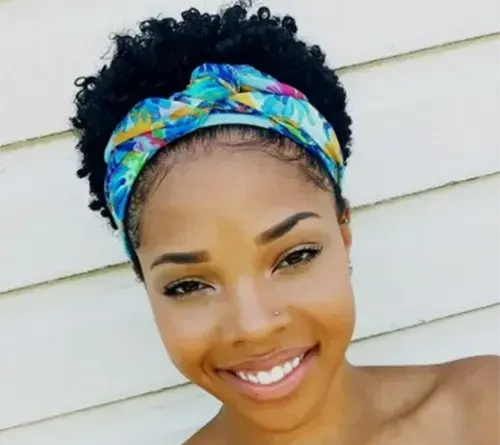
Sometimes little is more; you don’t need to add weaves or braided style to your short hair to get a colorful look. Allow your natural curls to fall freely, and use hair accessories like a tropical bandana.

It is a simple method to improve your daily look. Whenever you want those short twists off your neck, collect them into a high updo and wrap them in a vibrant bandana or headband. Leave the shorter pieces in the front out to soften the effect. 

Kinky Twist

zumawigs

Twists are one of the most popular African-American hairstyles. This unique style suits curly-haired ladies or anybody with “kinky” hair.

If you want your hairstyle to have a bit of an extra personality, you will love the kinked form of these short twists for black women. Because this style already has a lot of flairs, it requires low maintenance, needing just a center part. 

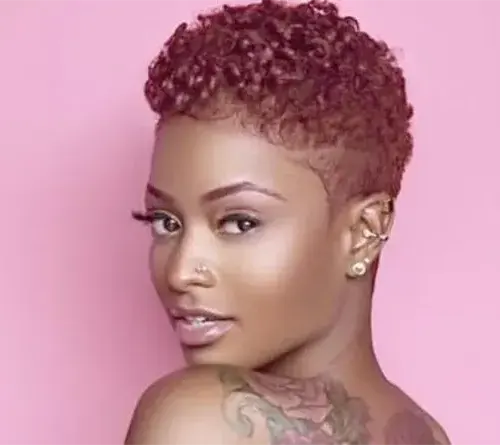
TWA Hairstyle

All black ladies with natural hair may sport short haircuts like a teeny weeny afro or TWA. TWA is a short natural hairstyle with a maximum hair length of 2 inches. It is the look you get after a major cut, either as a consequence of heat damage or as a transition from relaxed to natural hair.

TWA may be pretty adorable, fun, and flattering. Although having an oval-shaped face is preferable for the TWA hairstyle, wearing whatever you enjoy is still allowed if you don’t have much bone structure. 

Classic TWA

Classic TWA

The versatility of the classic TWA’s styling options is its main feature. It emphasizes a woman’s fierceness and confidence. If you’re thinking about getting this classic teenie weenie afro 

haircut, be sure that you want a shorter one since the grow-back procedure may be difficult.

Mini-Afro

Mini  Afro

With this Mini-Afro, you can embrace your natural curls and show them off. This excellent technique accentuates your volume while maintaining an easy-care style.

Natural afro hair is not difficult to keep; it only requires a healthy regimen, high-quality products, and a little drive! 

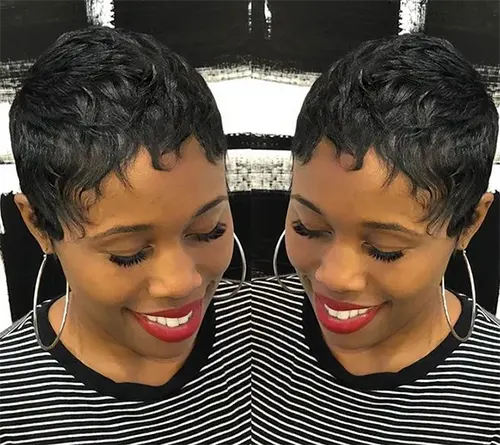
Pixie Cut

Think about getting a pixie cut if you want to restart your hair care regimen from scratch. You may concentrate on the new growth of your roots for healthy hair by shaving off the ends and mid-strand. Now, most black women visit the salon to keep their hair this length looking presentable unless it is naturally curly.

Short Curly Pixie Style

A short curly hair with a pixie cut is both very feminine and unconventional. This style is an excellent illustration of a short haircut for a black woman that suits every face shape.

Although hair texture dramatically impacts how the natural curls lie, you can do it with a flat iron and little to no product.

Stylish Razor Cut Pixie

Stylish Razor Cut
instagram/hairbyuno

A flawless, fashionable, short razor cut looks great on ladies as long as you have the guts to flaunt it.

You will need a textured, layered pixie cut to appear fantastic in any attire, so keep it basic.

Short Natural Bob Hairstyles

There are several techniques to cut a bob on short hair, such as angled, graduated, inverted, asymmetrical, and many more. You may personalize your short hair to fit your personality with many trendy and creative styles. Change your angle by adding big chop layers to a traditional bob for a simple and enjoyable change of pace. 

Sleek Modern Bob With A Side Part

Modern-Bob-With-A-Side-Part
instagram/beautyrebellion

A modern bob with a side part is timeless and adaptable to your preferences. Many contemporary bobs lack layers.

Ask your hairdresser to add natural hair texture and layers if you want a fuller appearance! 

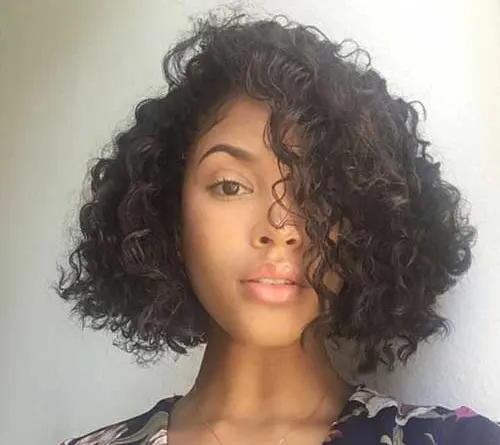
Full Curly Bob

bob-hairstyle

With a black woman’s natural short bob haircut, let your envious-inspiring locks go!

Use the stylist-recommended products to display the structure and volume of your natural hairstyles correctly. 

Mohawk for Black Women

Mohawks are popular among black women who wish to appear fierce and more powerful. Although current Mohawks are often more on the faux hawk side, this cool hairstyle never fails to make a statement.

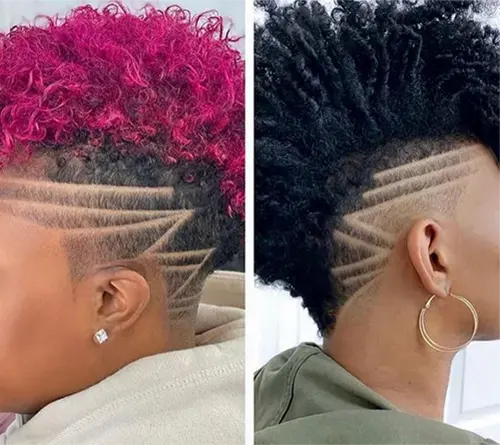
Short Afro Mohawk with Patterns

instagram/dreamcutsbarberlounge

Mohawks are a terrific technique for some black females with naturally curly hair to prevent too much frizzy volume.

You may look young and playful with patterns on a short afro mohawk. The curly hair twist with black tips successfully creates that appearance. 

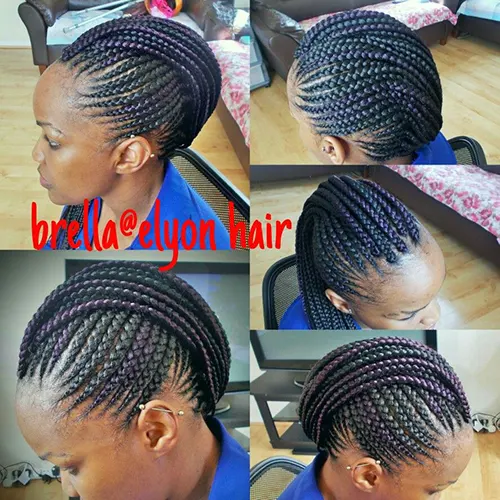
Braided or Cornrow Mohawk

Make a unique full or side cornrows by braiding your whole head of hair and sweeping the braids on top. You may shape the mohawk or pompadour in any way you like.

To keep it together, you will need a lot of hair gel and leave in conditioner after. The best part is that there is no need to trim your hair. 

Modern Buzz Cut

Shaved line is in! Don’t want to bother with a lot of hair products or styling? Choose a buzz cut! Those with equally proportioned diamond, square, or oval faces will look awesome in this style. If you don’t fit into that category, you may be able to pull one off, but it will most likely take some creative grooming to level off your jawline.

Classic Modern Buzz Cut

Women with short black hair have outgoing personalities that complement their appearance. The classic, modern buzz cut for ladies exudes a distinct type of femininity.

You may cut your hair down without any shaved lines if you want a smart approach to a feminine buzz cut. It’s sophisticated, sassy, and tasteful all at the same time.

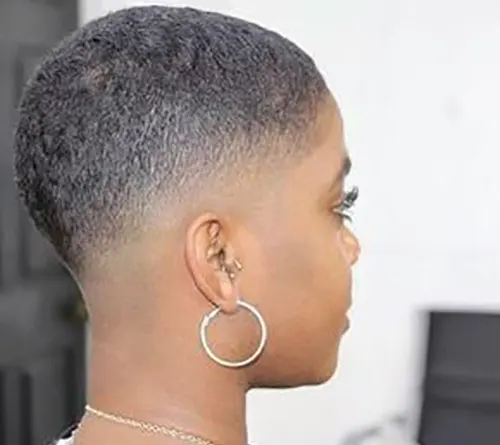
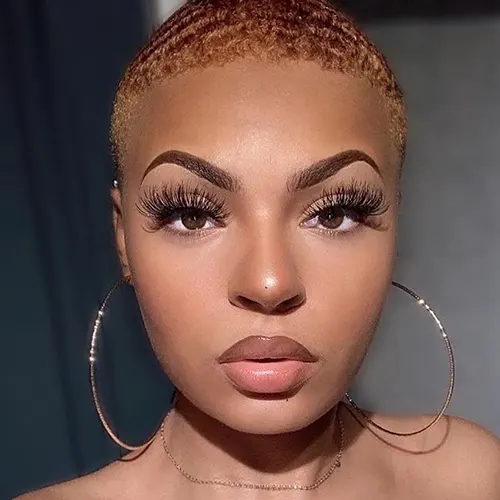
Close-cropped Buzz

Close-cropped buzz cuts are one of the most straightforward short natural hairstyles for black women to achieve. The perfect style is simple to maintain and enables your natural beauty to come through!

Choose a single length to keep things simple, as shown, or leave a bit extra length on top to give height and volume to this stunning, no-frills cut.

Short Weave Hairstyle

rihana

Over the last decades, various short-weave hairstyles have arisen among African-American women. Celebrities popularized many of these fashions.

A weave might be the solution if you need to give your strands a break after heat styling. While many women prefer longer hair, we like the stylish refinement of a shorter weave hairstyle for a graceful look

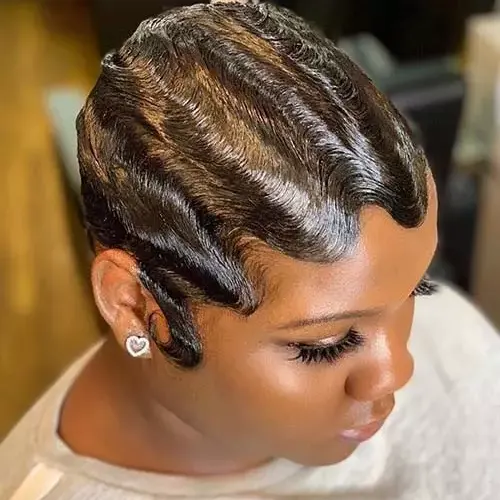
Sleek Finger Waves With A Weave

stylecraze

Although fashionable, short hairstyles for African-American women don’t necessarily seem contemporary as they age.

For black women in their 40s, sleek finger waves with a weave help you look fresh and younger-looking. 

Simple Bowl Cut with Short Weave

instagram/nouritress

A bowl cut, also known as a mushroom cut, is a basic haircut in which the front hair has a straight fringe, and the rest of the hair is left longer, the same length all around, or the sides and back are the same short length.

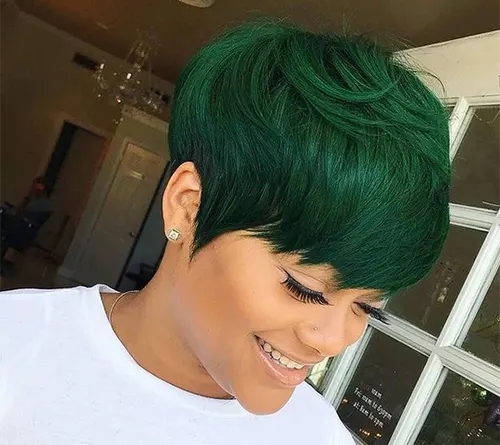
Black ladies who wear this simple bowl cut with a short weave hairstyle have an effortless, natural vibe because of the straight hair texture. Mix it with striking bright colors or caramel highlights for a fun, unique hair. 

Short Dreadlocks

If you don’t want to, you don’t have to wear curly short hair! If you want to keep it natural, you may go for dreadlocks. Short dreadlocks on ladies are adorable and flexible.

If you have short, coarse hair and wish to develop dreads, use a soft-bristled brush or a sponge brush to make tiny circular movements until the hair forms into balls. Add hair natural oils to maintain your small natural locks nourished and healthy.

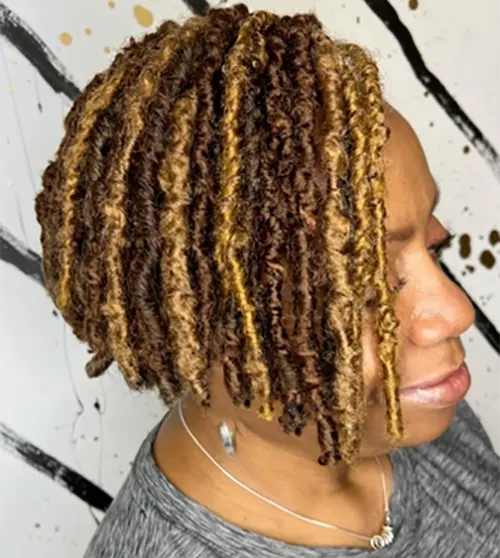
Faux Locs Bob

VanitybyDaniT

Dreadlocks take as much care and upkeep as any other hair type, if not more. After all, it takes time to go from ear-length locks to back-length locs. Growing healthy dreadlocks isn’t easy, but it’s also not impossible.

Only black women can pull off the quirky crochet tresses in this neck-length faux locs bob haircut. Faux locs bob is proven to flatter every facial features and hair types. We don’t see this trend going away anytime soon, so be ready to sport your faux locs bob look every day!

Wavy Dreadlocks

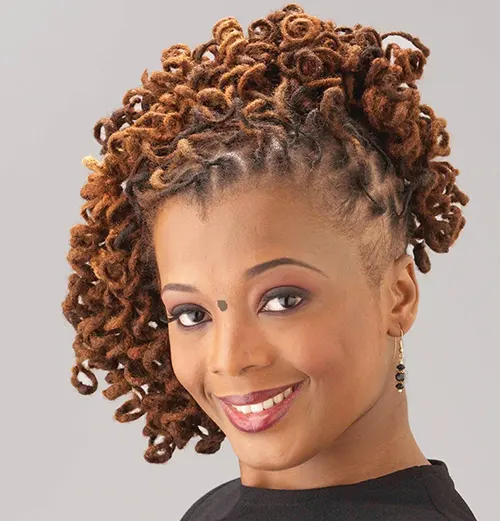
Wavy Dreadlocks-wavy style for your locs

Choose a wavy style for your locs to add texture. This style is a great way to spice up your typical locs look. Try this short curly dread haircut for additional fullness in your dreadlocks.

These tight curls will give your dreads more glitter, and the curling spirals move with a lot of body.

Conclusion

Natural hair, indeed, does have a flair all of its own. You can have different hairstyles to create a look that’s unique to you.

Whether it’s a pixie cut, bob, or any other natural hairstyle, there are plenty of great options for some amazing short haircuts for women. Showing off a short natural hairstyle is a great way to show other women your confidence in your natural beauty.

Can Tattoos Fade Away? Causes & Tips To Make Tattoos Last

0

Getting a tattoo isn’t an easy decision to make. Apart from the pain, you also have to think about the cost and how long it’ll last. Considering what you have to go through, you need to make sure that it’s going to be worth it. 

Tattoos may fade over time. Factors such as aging, ink quality, and even the skill of your tattoo artist can affect the longevity of your body art. Too much sun exposure can also make your tattoos fade faster.

If you’re planning on getting a new tattoo and want it to look striking for the years to come, read on.

Quick Navigation

What Causes Tattoo Fading?
How Quickly Do Tattoos Fade?
Tips to Make Sure Your Tattoos Last
What To Do If You Have A Faded Tattoo?
Conclusion

What Causes Tattoo Fading?

adrenalinestudios

As mentioned earlier, there are several reasons why tattoos fade over time. Here are some of them:

Aging

As you get older, your skin changes and deteriorates. In the process, your skin becomes less elastic, causing wrinkles to form. Your skin also stretches and sags and these changes affect how your tattoo will look over time.

Low-Quality Ink

Tattoos made using low-quality ink tend to fade faster. Why?

For one, the said type of ink usually has low pigmentation. It’s usually loaded with chemicals as well. Poor-quality tattoo inks are linked to skin infections and skin issues too. 

Poor Tattooing Skills

Tattoo ink that is not delivered at the right depth can cause it to fade faster. And yes, that’s regardless of whether high-quality ink was used. 

With that, it is advisable to get professional tattoos from reputable tattoo artists

Professional artists can properly deliver the ink because they are knowledgeable about the layers of the human skin. They know that tattoo ink should be embedded into the skin’s second layer, the dermis. 

There, ink particles are passed on to new cells, making the tattoo permanent and lasting.

Prolonged Sun Exposure

UV rays aren’t just bad for the skin but tattoos as well.

The sun’s UV rays penetrate the skin, destroying the pigments of your tattoo in the process. Too much sun exposure can leave your tattoo looking lighter, blurry, and smudged. 

Over-Exfoliation of the Skin

Exfoliating the skin is good because it removes oil, dirt, and dead skin. However, when done excessively, it can cause damages too.

Over-exfoliation removes the skin’s hydration layer, a protective barrier of the skin. This can lead to skin irritation and changes.

When the skin is irritated, it is wounded. When there’s an injury, an immune response is triggered and your body’s internal system will immediately work to heal the wounded skin. This scenario increases the skin’s renewal rate which can cause your tattoo to fade.

Poor Tattoo Aftercare

Once your new tattoo is done, it is a must to take care of it at the very start. You must have a proper aftercare routine for your tattoo to prevent infections or inflammations. You may ask your tattoo artist for tips on how to care for your tattoo at home. Avoid making your own aftercare routine. 

Poor-Tattoo-Aftercare
savedtattoo

A simple aftercare routine that you can do is to wash the area with warm water and antibacterial soap. Don’t forget to moisturize your tattoo twice a day and avoid wearing tight clothing. It’s also a must that you shield your tattoo from the harmful UV rays of the sun. 

How Quickly Do Tattoos Fade?

All tattoos will inevitably start fading over time. There are tattoos that will start fading in just a couple of years, while there are some that will start fading when you reach old age.

Aside from the common causes mentioned above, the location of your tattoo can also affect its longevity. 

You may want to avoid getting inked on these body parts:

  • Palms and fingers (hands are constantly used and experiencing high levels of friction)
  • Feet (feet are constantly used and produce sweat)
  • Mouth or lips (thin skin and constantly exposed to changing temperature and moisture)
  • Shoulder blades (experiences friction due to bag carrying)

The color of your tattoo is something you should consider as well. Bright or lighter colors tend to fade faster than dark colors such as black or grey. 

Tips to Make Sure Your Tattoos Last

All tattoos can fade but the rate of fading varies depending on how you take care of your tattoo. Below are some suggestions on how you can minimize your tattoo from fading.

Take Care of Your Tattoo

An aftercare routine for your tattoo is very important. Here is a suggested routine that you can do when you get home after getting a fresh tattoo:

  1. After your tattoo is completed, let the bandage stay on for at least a couple of hours.
  2. Once you have removed the bandage, wash your tattoo with clean, antibacterial, and unscented soap.
  3. Don’t wipe your tattoo with a fabric towel. Let it air dry for parts of the towel may get stuck to your tattoo or wound.
  4. Let your tattoo remain uncovered and avoid wearing tight clothes. Moisturize it with a cream, lotion, or moisturizer.

Importantly, avoid picking or peeling off the scabs of your skin or scratching your tattoo when it is still in the healing process. Doing this can ruin the detail of your tattoo.

But, avoid over-cleansing or over-caring for your skin because the process can remove its protective layer and cause skin irritation. It can also cause your tattoo to lose its shine and vividness.

Wear Sunscreen and Protective Clothing as Much as Possible

Wear-Sunscreen-and-Protective-Clothing-as-Much-as-Possible
oracletattoogallery

In the first weeks of your tattoo’s healing process, avoid exposing it to sunlight. If exposure is hard to avoid, you must apply sunscreen over it. 

You may also want to avoid tanning beds if you have tattoos. Wear comfortable or loose clothing. Avoid wearing tight clothing because this can cause friction with your tattoo.

Stop Smoking!

Smoking can negatively impact your health and this is reflected in your skin. 

Smoking makes you look older even if you are still young. It decreases your body’s collagen production which makes your skin look plump and less elastic.

Stay Hydrated Always

If you are always hydrated and you eat healthily, you are taking care of your skin which houses your tattoo. Make sure to hydrate with water and not with alcoholic drinks.

Moisturize Your Skin with the Right Products

Part of your skincare routine is to moisturize your tattoo at least once or twice a day. Continue moisturizing your tattoo even if it has completely dried and healed. You may want to shop around for brands that continually develop and improve products.

What To Do If You Have A Faded Tattoo?

Touch-up is the solution!

If you notice that your tattoo is starting to fade, you may want to set an appointment with your tattoo artist for a touch-up. Older tattoos that have been exposed to the sun for quite some time may require a full revamp because more than one color has faded.

Conclusion

Tattoos will not stay vivid for life. Anyone with a tattoo will experience fading at some point. This, however, should not discourage you from getting inked. There are ways you can minimize the fading process of your tattoo. The best remedy to this fading problem is a healthy lifestyle.

If you take care of yourself by eating right, staying hydrated with water, being active, avoiding prolonged sun exposure, avoiding smoking, drinking, and other vices, you can have healthy skin for your tattoo. Your healthy lifestyle choice will be reflected in how your tattoo will look over the years.

Are Tattoos Illegal? What You Need to Know Before Travelling

The tattoo industry is no longer as bad as it seemed before. In fact, there are countries that don’t consider tattoos taboo anymore. However, if you are a frequent traveler, you should keep in mind that there are still areas in the world that don’t accept tattoos.

Tattoos are widely accepted in the Western world and European countries. However, having tattoos in some states and countries under the Islamic Law like Saudi Arabia, Afghanistan, and the United Arab Emirates can put you at risk of getting shamed, penalized, and jailed.

Planning a trip but unsure whether tattoos are legal there? Don’t worry! We’ve rounded up a quick list of the countries where tattoos are illegal and what designs to avoid.

Quick Navigation
Countries Where Tattoos are Limited or Strictly Forbidden
   1. Iran
   2. South Korea
   3. North Korea
   4. Thailand
Tattoo Designs that Could Cause Serious Trouble
   Religious Symbols
   Nazi Symbols
   Face Tattoos
Tips to Avoid Trouble
   Do Some Research
   Avoid Getting a Controversial Tattoo
   Wear Clothes that Hide Your Tattoos
   Consider Getting Your Tattoo Removed
Conclusion

Countries Where Tattoos are Limited or Strictly Forbidden

Countries-Where-Tattoos-are-Limited-or-Strictly-Forbidden
adrian cabello

Tattoos and body art have gained immense popularity worldwide for the past few decades. What used to be rebellious and vulgar, is now viewed as a form of self-expression in this generation. 

To give you an idea of how much the tattoo industry has grown, approximately 30-40% of Americans are inked. Pre-pandemic, tattoo conventions had hundreds of attendees including tattoo artists and audiences.

However, there are still several countries that find tattoos culturally inappropriate or blasphemous. Few of these have specific laws that make it completely forbidden. Take a look at the list below:

1. Iran

Tattoo and body art procedures are illegal in Iran under the Islamic Law and Sharia Law. According to them, having tattoos is sinful because it is mostly performed among organized crime groups and non-Muslims. Plus, they insist that getting a tattoo is highly dangerous to one’s health.

Being a tattooed person in Iran is not a fun experience. When caught with visible tattoos, you could get arrested, fined, and kept in prison for longer than necessary. Even worse, Iranians like to parade arrested people in public to shame them. 

Interestingly, the tattoo industry in Iran has not completely shut down because of its high demand among young people. In fact, Iranian tattoo artists have an underground tattoo community where tattoo shops and body piercing studios are kept out of the public’s judging eyes. 

Other Muslim countries where tattoos are illegal under such laws include:

  • United Arab Emirates
  • Saudi Arabia
  • Malaysia
  • Yemen
  • Afghanistan

2. South Korea

Unexpectedly, South Korea is not a big fan of tattoo artists and body art. Although it is not banned outright in the country, South Korea has pretty severe tattoo laws.

For instance, one public health law in 1992 states that only a licensed physician can perform body art procedures to ensure ‘safe practices’.

South-Korea-Tattoo-Laws
japantimes

That’s right. If you want to get tattooed in South Korea legally, you’ll need to visit a hospital instead of a tattoo shop. Although it doesn’t make any sense, attempts to overturn this law are repeatedly shut down. Hence, tattoo artists are forced to operate secretly.  

It’s easier to find a skilled South Korean tattoo artist through social media. Most tattoo shops don’t set up signages, so unless you know the exact address then you’ll definitely miss these gems. In Hongdae for instance, there are a lot of tattoo parlors hidden in plain sight. 

Having visible tattoos isn’t much of an issue in South Korea, but it could attract a lot of dirty looks from local people. But if you’re planning on becoming a licensed tattoo artist in the country, then we suggest you think twice.

On the brighter side, South Korean artists and celebrities such as HyunA and Jay Park have been open to having tattoos in hopes to eliminate the stigma. So let’s hope to see some law changes in the future!

3. North Korea

In North Korea, the North Korean Communist Party runs the game. They regulate tattoo designs as they see fit and can ban religious symbols, rebellious signs, etc. They’ve even banned something as trivial as the word ‘love’ at one point! 

What they do encourage though are tattoos that express love and dedication towards their leader, the Party, and North Korea.

4. Thailand

In Thailand, having religious tattoos is illegal. Most especially, having a tattooed image of Buddha’s head. A law passed in 2011 recognized this act as an insult to Buddhists, regardless if you’ve done it as a sign of faith. It’s mostly the same case in other Buudhist-dominated countries like Sri Lanka. 

Basically, it’s similar to how Muslim countries ban tattoos under the Islam or Sharia Law. So if you’re a liberated Buddhist with a tattoo of Buddha’s head on your back, then you might want to keep them hidden under your clothes during your Thailand or Sri Lanka trip. 

Tattoo Designs that Could Cause Serious Trouble

One crucial part about getting a tattoo is making sure that you won’t regret choosing that design in the future.

For instance, a sleeve tattoo of your ex’s face, or a mistranslated Chinese character that meant nothing close to what you thought it was. Not only is that extremely embarrassing, but also a huge waste of money and space.

Tattoo-Designs-that-Could-Cause-Serious-Trouble
radaronline

Now there are certain tattoos that will bring you something way worse than shame. Being careless about your new tattoo could get you caught up in tattoo laws and jailed.

The government might misjudge you as a member of an organized crime group, and worse, you might even get deported for it. 

Here are some types of body art designs that you’ll want to avoid:

  • Religious Symbols

Religious iconography is strictly forbidden in some countries. Most especially, in Muslim or Buddhist countries as they view this as immense disrespect to their religion. Hence, you might encounter a few body art practitioners refusing to do religious tattoos or suggesting a different design. 

  • Nazi Symbols

Another controversial tattoo that is inappropriate to have are Nazi or White Pride tattoos. Getting inked with these designs glorifies the Nazi regime and all the traumatic events that occurred in the past.  These designs are illegal in Germany, France, and Slovakia despite them being generally accepting of tattoos.

  • Face Tattoos

Although these won’t cause as much trouble as the previous two, face tattoos are also banned in some states like Georgia. According to their law, it is illegal to get tattoos around the eye socket, regardless if it is a cosmetic tattoo.

Tips to Avoid Trouble

You won’t lose anything from being kind. If you want your first tattoo to be a memorable one, then it’s best to do some research before getting inked. Some designs might look cool, but you won’t want to risk offending anyone.

It’s the same case if you’re planning to go on a trip to tattoo-sensitive places like Sri Lanka or Iran. Getting stares from local people is certainly bearable. However, you might end up in jail or deported because of certain tattoo laws. 

Tips-to-Avoid-Tattoo-Trouble
npr

So if you already have an existing tattoo that might seem offensive to certain cultures or groups, then it might be best to keep it hidden to avoid unnecessary issues. 

Here are some tips for tattooed travelers who plan to visit the aforementioned countries:

  • Do Some Research

Study the tattoo laws in the country you’re traveling to. Be familiar with what’s tolerable to them and which designs are taboo. You may also want to dive into their views on other types of body art as well, such as body piercing and cosmetic tattoo. 

  • Avoid Getting a Controversial Tattoo

If you’re still planning on getting a tattoo then we suggest getting a tattoo that won’t offend any culture or religion. As mentioned earlier, some countries have state law that bans certain types of tattoos like religious images, cosmetic tattoos close to the eye, and Nazi symbols. So you’ll want to avoid these if you travel a lot!

  • Wear Clothes that Hide Your Tattoos

Unlike when you’re in New York, you can’t keep your existing tattoos and body art out and proud in these countries unless you want to be sentenced to a class B misdemeanor case. Hence, as a tattooed traveler, it would be best to wear clothes that keep your tattoos out of sight for the meantime.

  • Consider Getting Your Tattoo Removed

Now if you’re planning to migrate to a country where tattooing is illegal, then you might want to consider tattoo laser removal. Tattoo laws aren’t very friendly although most of these claim to be for environmental control. Thus, being tattooed in these countries might affect your relationship, career, and overall living conditions.

It might be a shame, but definitely better than the consequences!

Conclusion

tattoo-conclusion
tourradar

Tattoo is both an art and a responsibility. We can’t expect everyone to conform to our beliefs especially if we are just visitors in their country. The world is a diverse place and if we want to be respected, then we should do the same. 

So if you plan to fly to a different country as a tattooed traveler, then take some time to sit and see if there are tattoo restrictions there.

If not, you’re lucky! But if they do, then it’s best to be open-minded and keep your art hidden for the meantime. As we said, you’ll never lose anything from being kind and sensitive.